Water Heater Leak Detection Methods That Actually Work
Water rarely announces itself politely. By the time you notice a damp spot near your water heater, the leak may have been active for days — or the moisture might not be from the heater at all. Condensation, a nearby washing machine hose, a sweating cold-water pipe, or even a roof leak can all masquerade as a water heater problem. Before you spend money on repairs, it pays to confirm the source. This guide walks through the leak detection methods that actually work, starting with simple DIY checks you can do today in your DeSoto home and moving up to the professional tools we use when the source stays hidden.
Why does accurate detection matter so much? Because the fix depends entirely on the source. A dripping drain valve is a thirty-minute repair; a weeping tank seam means replacement. Misdiagnosing one as the other wastes money at best and leaves real damage growing at worst. Work through these methods in order — each step narrows the possibilities.
Start Here: The Systematic Visual Inspection
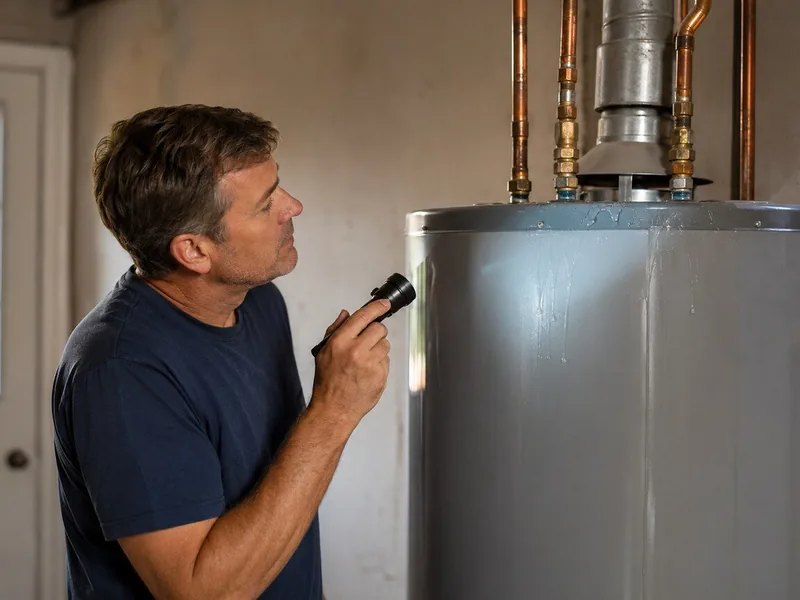
Most water heater leaks are found with nothing more than a flashlight, dry towels, and patience. Turn off the lights in the utility area so your flashlight beam shows reflections on wet metal clearly.
- Dry everything first. Wipe down the tank, pipes, and floor completely. You cannot trace a leak through old moisture.
- Check the top. Look at the cold-water inlet and hot-water outlet connections, the draft hood area on gas units, and the T&P valve. In DeSoto's hard-water territory, white or green mineral crust around a fitting is a roadmap to a slow weep.
- Check the sides. Run your hand along the tank jacket seams and around the access panels on electric units. Rust streaks running downward point to the fitting or seam above them.
- Check the bottom. Crouch down and look at the base of the tank and the drain valve. Fresh drips, rust-colored water, or a damp drain pan all tell a story.
- Check the floor outward. Water travels. Follow any dampness to its highest and driest point — that is usually closest to the source.
If the visual pass finds nothing but moisture keeps appearing, move to the active tests below. And if you see water spraying or streaming rather than dripping, skip ahead — that is a plumbing emergency and needs same-day help.
The Paper Towel Test
This old technician's trick is remarkably effective for intermittent drips. After drying the area, wrap dry paper towels or white rags snugly around each suspect fitting — inlet, outlet, T&P valve, drain valve, and any visible pipe joints. Leave them for a few hours while the household uses hot water normally, then check each towel. The wet one marks your leak, even if the drip only happens while the burner or elements are firing. For the base of the tank, lay a ring of paper towels around the bottom edge; the first damp section points to the seam or area above it.
The Water Meter Test (Is Anything Leaking at All?)
Sometimes the real question is whether the water heater is leaking or the moisture comes from elsewhere. The water meter answers it. Turn off every water-using fixture and appliance in the house — ice makers and irrigation included — then watch your water meter for 15 to 20 minutes. If the dial or digital readout moves, water is flowing somewhere it should not be. Next, shut off the cold-water supply valve to the water heater and watch the meter again. If the movement stops, the leak is on the heater or its connected piping; if it continues, look elsewhere in the house. This test is especially useful in DeSoto homes built on slabs, where a hidden leak can mimic heater trouble by wicking moisture across the concrete.
Dye Testing the Drain Valve
Drain valves are notorious slow leakers, and their drips often evaporate on a hot garage floor before you ever see them. Add a few drops of food coloring to a cup of water and pour it into the drain pan (or place a dye tablet, if you have one, in the pan). If colored water later appears on the floor outside the pan, you have confirmed the pan's drain line path; if the pan itself fills with clear water, the moisture is coming from the heater above it, not the pan. Reverse the test for the T&P discharge pipe: hold a dry white cloth at the pipe's end for an hour to catch any intermittent discharge.
Checking the Usual Hidden Spots
Several leak sources hide where homeowners rarely look. Pull back insulation around the top fittings — slow seeps often soak the insulation first and only stain the jacket later. On gas units, remove the burner access cover (with the gas control set safely) and shine a light inside the combustion chamber; rust flakes or water staining there suggest internal tank seepage. Check the expansion tank by tapping it: the top half should ring hollow and the bottom half sound solid; a tank that sounds solid throughout is waterlogged and may be forcing the T&P valve to weep. Finally, inspect the drain pan and its drain line — a cracked pan or clogged pan drain turns a minor drip into floor damage.
Ask a Pro → Not sure what you're dealing with? Call (833) 713-2101 and describe what you see — we'll point you in the right direction.
Professional Detection Tools
When DIY methods come up empty but moisture persists, technicians bring specialized tools. Moisture meters with pin probes measure exactly how wet drywall, baseboards, and subflooring are, mapping the spread of hidden water. Thermal imaging cameras reveal temperature differences — active leaks show as cool signatures inside walls or under the heater platform. Pressure testing isolates the tank: with fixtures closed, a technician pressurizes the system and watches for drops that indicate a breach. And borescopes let us see inside wall cavities and behind the heater without demolition. These tools matter most when the leak is intermittent, when water appears far from the heater, or when an insurance claim needs documentation.
What Your Findings Mean
- Fitting or valve drip: Usually repairable — tighten, reseal, or replace the component. See our T&P valve service in DeSoto if the relief valve is the source.
- Water from the tank seam or jacket: The tank itself is failing. No sealant or patch is reliable; plan for water heater replacement.
- Moisture only when the burner runs: Suspect flue condensation or a tankless condensate issue rather than a true leak.
- No leak found, moisture persists: Look beyond the heater — sweating pipes, AC condensate, or slab moisture may be the real source.
When to Call for Professional Leak Detection
Call if the source is not obvious after the DIY steps, if water is spreading into walls or flooring, if you smell gas, or if the meter test shows continuous flow you cannot account for. Every hour a hidden leak runs, the water damage bill grows — drywall, baseboards, and flooring are far more expensive to repair than the plumbing fix that stops the water. Our technicians serve DeSoto and surrounding Dallas County with same-day detection visits.
Noticed water around your heater? Don't wait for it to get worse. Call (833) 713-2101 → for fast help in DeSoto and the surrounding Dallas County area.
Frequently Asked Questions
Can a water heater leak intermittently?
Yes — very commonly. Leaks that appear only during or after a heating cycle usually involve thermal expansion, the T&P valve, or fittings that weep as metal expands and seal as it cools.
How do I know if the leak is the tank or just a fitting?
Dry everything and use the paper towel test. Water from a fitting stays localized to that fitting; water appearing along a jacket seam, from under the tank's bottom edge with no fitting above it, or from inside the combustion chamber points to tank failure.
Is a leaking water heater covered by homeowners insurance?
Sudden, accidental leaks are often covered, while long-term seepage from lack of maintenance usually is not. Document everything with photos and dates regardless.