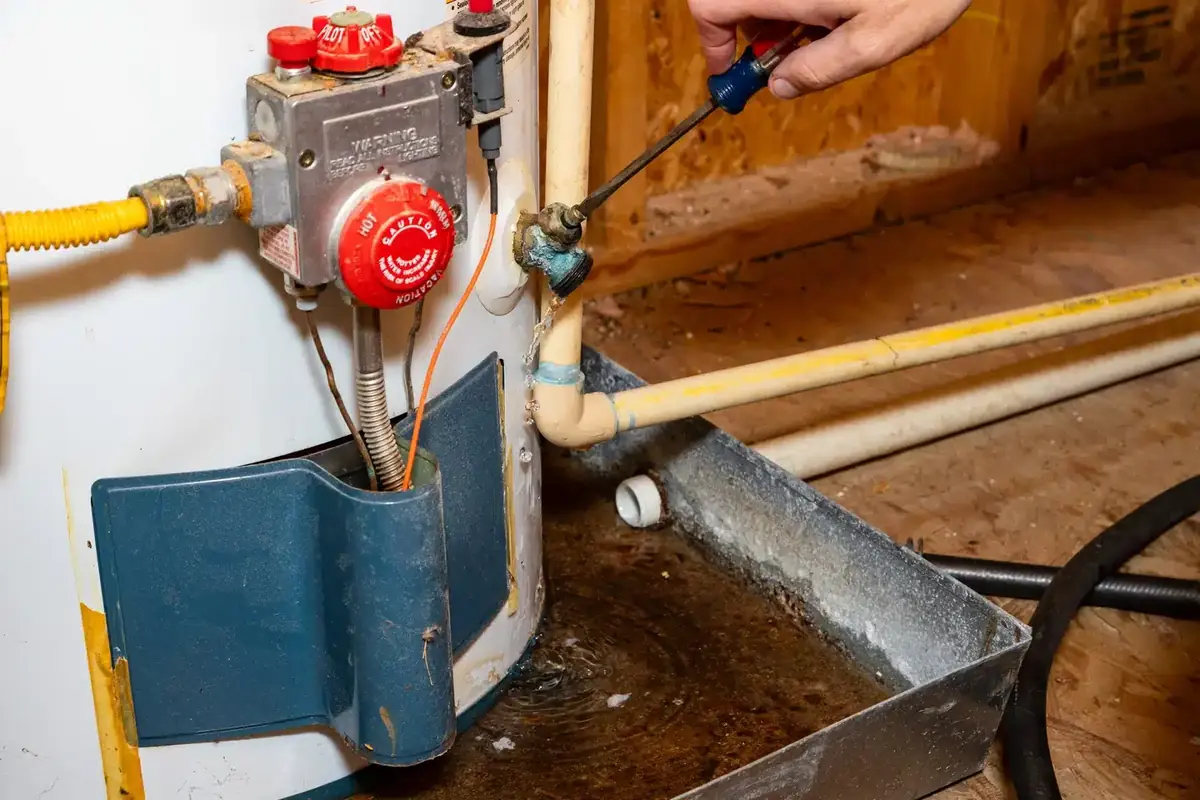
IN SHORT: A leaking water heater can flood your floor with dozens of gallons. If water is pooling around your tank in DeSoto, close the cold-water valve above the heater, switch off power or gas, and call (833) 713-2101. We triage every leak by source: bad fittings and valves are usually repairable on the spot; a ruptured tank calls for same-day replacement.
Water heater leaks rarely announce themselves politely. Most DeSoto homeowners discover theirs the same way: a dark stain spreading across the garage floor, a squelching step in the utility closet, or a water bill that suddenly makes no sense. A standard 40- or 50-gallon tank holds enough water to ruin flooring, drywall, and anything stored nearby, and once a leak starts it does not pause for business hours.
That is why we treat water heater leaks as urgent calls. The first goal is always the same: stop the water, make the heater safe, and figure out exactly where the leak is coming from, because the source determines everything that follows. Some leaks are quick fitting repairs. Others mean the tank itself has failed and the only safe answer is a replacement. This page walks you through what to do in the first five minutes, how we triage a leak on arrival, and what DeSoto homeowners should know about where these failures come from.
First Five Minutes: What to Do Before We Arrive
- Shut off the cold water to the heater. Look for the valve on the cold-water pipe entering the top of the tank and turn it clockwise until it stops. This cuts the supply feeding the leak. If that valve is seized, shut the home's main water valve instead.
- Kill the heat source. For electric heaters, switch the water heater breaker to OFF at the electrical panel. For gas heaters, turn the control knob to PILOT or OFF. A heater firing with a low water level can overheat dangerously.
- Open a hot-water tap. Opening a hot tap anywhere in the house relieves pressure and lets air into the system so the tank can drain.
- Drain water away from the house. If you have a garden hose, thread it onto the drain valve at the tank's base and run it to a floor drain, driveway, or yard. Even a partial drain-down slows the damage.
- Protect what matters. Move boxes, tools, and valuables away from the water, and take phone photos of the leak and any damage. Those photos help enormously if you file a homeowner's insurance claim later.
Two hard safety rules. If there is standing water around an electric heater, do not wade in to reach the panel; call us and we will talk you through cutting power safely. If you smell gas, rotten-egg odor near a gas heater, leave the area immediately and call your gas utility from outside. Do not flip switches or relight anything.
Where Leaks Actually Come From: Triage by Source
When we arrive, the first job is finding the true source, because water travels and the puddle is often not directly under the failure. We dry the area, watch where water reappears, and work through the usual suspects in order:
- Top fittings and nipples. The hot and cold connections on top of the tank corrode over years of condensation and minor seepage. These are repairable: new nipples, fresh dielectric unions, proper sealant.
- The temperature-and-pressure relief valve. A dripping T&P valve is often a symptom, not the disease: excessive pressure from thermal expansion, a waterlogged expansion tank, or a thermostat set too high. We diagnose the cause rather than just swapping the valve.
- The drain valve. A weeping or cracked drain valve at the tank base mimics a tank leak. Replacement with a full-port brass valve solves it.
- The anode port. Seepage around the anode hex head can usually be resealed.
- Condensation. In humid weather or after a heavy hot-water draw, a cold tank sweats. We verify this before declaring a leak, because replacing a heater over condensation is an expensive mistake.
- The tank wall or a seam. Rust-through on the tank body or a split weld is the one source that cannot be repaired. A pressure vessel with compromised steel is unsafe to patch, and the correct answer is replacement.
Repair vs. Replace: How We Make the Call on Site
The decision comes down to two questions: where is the water coming from, and how old is the tank? A five-year-old heater with a leaking top nipple gets a repair, full stop. A twelve-year-old heater weeping from a bottom seam gets a replacement recommendation, because even if we could slow that leak, the tank has told us its service life is over. Between those extremes, we weigh the repair cost against the tank's remaining expected life and give you a straight recommendation with the numbers, so the choice is yours with eyes open.
We are blunt about one thing: nobody can safely weld or epoxy a rusted tank wall back to integrity. The tank is a pressurized vessel, and a patch over thinned, corroded steel is a burst waiting for a bad day. Any company willing to patch a tank body is selling you a temporary illusion. When replacement is the answer, we say so plainly and we can usually complete a same-day swap.
What Happens When You Call (833) 713-2101
- You describe the leak. Where is the water, how fast is it spreading, gas or electric, and roughly how old is the heater? We will talk you through the shutoff steps above if you have not done them yet.
- We come out and triage. Stop the water, make the unit safe, and trace the leak to its true source. You get a clear diagnosis in plain language, not jargon.
- You get an upfront price and a fix. Fitting-level repairs happen on the spot from the parts we carry. If the tank needs replacing, we explain your options and, in most cases, complete the swap the same day.
DeSoto Realities: Garages, Freezes, and Slab Foundations
DeSoto's housing shapes how water heater leaks behave here. The great majority of heaters in town sit in garages, which means a leak often goes unnoticed longer than it would in a lived-in utility room; by the time someone walks into the garage, the water has had hours to spread. Our slab-on-grade foundations mean there is no basement to catch or reveal a slow leak early, and water follows the slab straight into adjacent rooms, under baseboards, and into wall cavities.
Then there is the freeze factor. North Texas cold snaps, the February 2021 freeze most memorably, punish aging plumbing: water expands as it freezes, stressed fittings crack, and tanks already weakened by years of hard-water sediment give up at their seams. We see a reliable spike in leak calls during and after every hard freeze. Add DeSoto's hard water, which lays down sediment that overheats tank bottoms, and the large stock of 1970s-through-1990s homes running heaters well past their prime, and you have a city where knowing your shutoff locations before an emergency is simply good homeownership.
Limiting Water Damage While You Wait for Us
Once the supply is off and the tank is draining to a safe level, the damage-control game is about time and airflow. Mop or wet-vac standing water, pull up any soaked rugs, and get air moving with fans; DeSoto's humidity makes slow drying an invitation to mold. If water reached drywall, note how high the wet line climbs, since that tells the restoration picture later. Keep the area clear for our technician: the faster we can reach the heater, the faster the diagnosis happens. And hang onto those photos you took; paired with the date, they are exactly what an insurance adjuster wants to see.
Water on the Floor? Don't Wait Until Morning
Every hour a leak runs is more damage to flooring, drywall, and belongings. Water Heater Leak Repair Specialists takes emergency water heater leak calls across DeSoto, TX. Call (833) 713-2101 now and we will talk you through the shutoff while help is on the way.