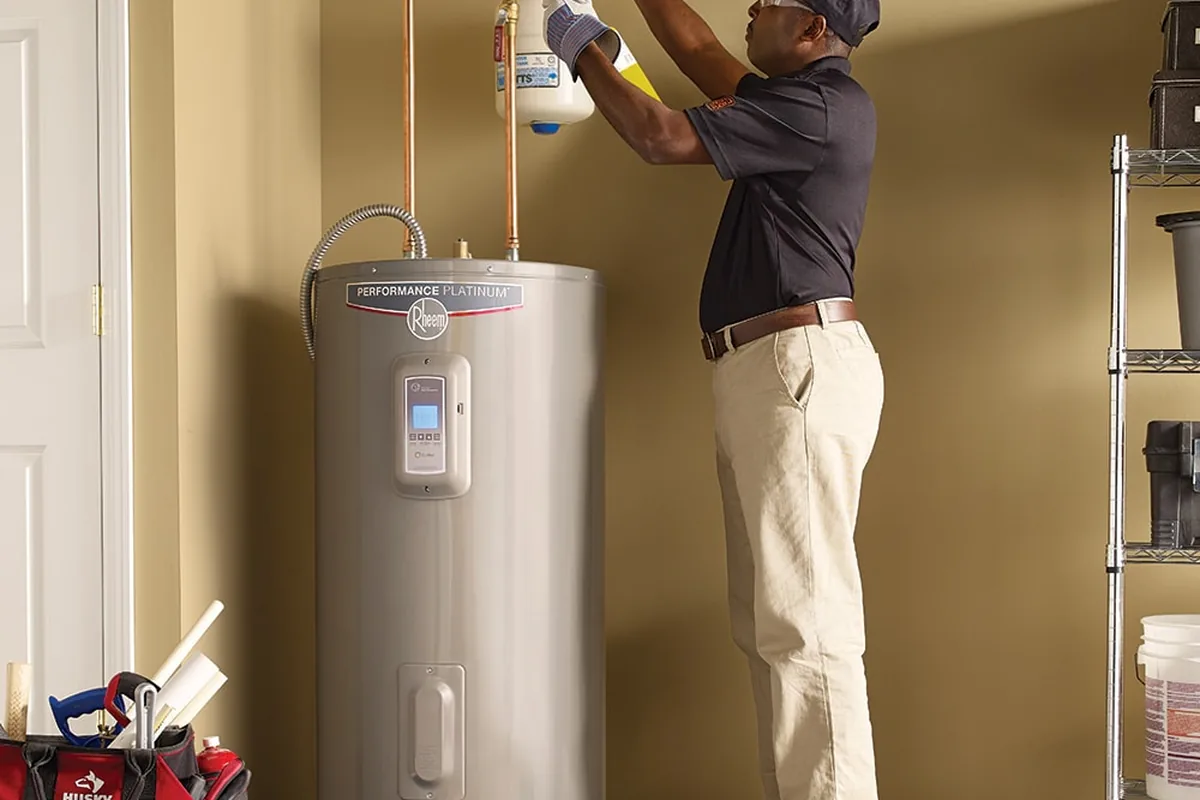
Water Heater Replacement in DeSoto, TX
IN SHORT: When your water heater's tank fails, repairs stop making sense — replacement is the answer. We help you choose the right size and type, handle the full installation to code including pan, expansion tank, and discharge piping, and haul the old unit away. Call (833) 713-2101 for same-day water heater replacement in DeSoto.
Knowing When Repair Stops Making Sense
Most water heater problems are repairable: thermostats, elements, gas valves, TPR valves, and fittings can all be replaced, and we do those repairs every day across DeSoto. But the steel tank itself is a different story. Once the tank wall rusts through — at the bottom seam, around a welded fitting, or behind years of sediment — there is no reliable patch. Tank coatings and epoxy fixes are temporary at best on a pressurized vessel, and a tank that has breached in one spot is corroding everywhere. At that point, every dollar spent on the old heater is a dollar that should have gone toward its replacement.
The signs that replacement time has arrived are consistent: rust-colored hot water, a leak originating from the tank wall rather than a fitting, rumbling and popping from heavy sediment that flushing no longer quiets, and age — conventional tanks typically last 8 to 12 years, and DeSoto's hard water pushes many toward the shorter end of that range. If your heater is over ten years old and needs a major repair, we will lay out the math honestly: the cost of the repair, the remaining life you can reasonably expect, and the cost of a new unit with a fresh warranty. Sometimes the repair wins. Often, at that age, it does not.
Sizing Your New Heater Right
The most common replacement mistake is copying the old heater's size without asking whether it was ever right. Sizing starts with your household and your habits, not with what was in the garage before:
- 1–2 people: a 40-gallon tank is usually plenty, with a first-hour rating around 60–70 gallons
- 3–4 people: the 50-gallon sweet spot — the most common residential size in DeSoto — delivering 80–90 gallons in the first hour
- 5+ people or luxury bathrooms: 75-gallon tanks or high-recovery 50-gallon models, especially with soaking tubs or multiple simultaneous showers
First-hour rating — how much hot water the heater can deliver in a busy hour, combining stored water with recovery — matters more than tank gallons alone. A high-recovery 50-gallon can outperform a standard 65-gallon. Gas heaters recover roughly twice as fast as standard electric, which is why a gas household can often size down. Texas gives us one more advantage: incoming groundwater runs warm much of the year, so heaters here recover faster and work less hard than identical units in cold climates. We factor all of this in rather than just swapping like-for-like.
Tank, Tankless, or Heat Pump: An Honest Comparison
Replacement is also the moment to reconsider the technology. Here is how we frame the choice for DeSoto homeowners:
Conventional tank
The straightforward, affordable workhorse. Lowest upfront cost, simple installation using your existing gas line or electrical circuit and venting, and any technician can service it. Downsides: standby heat loss, a finite 8- to 12-year life in hard water, and a tank of water waiting to leak someday. For most households, a quality tank with a 9- or 12-year warranty remains the sensible value choice.
Tankless (on-demand)
Endless hot water, no standby losses, and a 15- to 20-year lifespan in a wall-hung package. The trade-offs are real, though: higher upfront cost, often requiring a gas line upgrade or a new high-amperage electrical circuit, annual descaling that is non-negotiable in DeSoto's hard water, and the cold-water sandwich effect in some installations. Tankless shines in homes with high hot-water demand and owners committed to maintenance.
Heat pump (hybrid) electric
Two to three times more efficient than standard electric tanks, pulling heat from the surrounding air. Excellent in a warm Texas garage, where ambient heat is free energy most of the year. Considerations: higher purchase price, slower recovery in cold snaps, condensate drainage to manage, and more noise than a standard tank. Where the installation location suits it, the energy savings are substantial.
We install all three and will recommend based on your home's infrastructure, your water usage, and your budget — not based on which unit carries the best margin that week.
What a Proper Replacement Includes
A water heater swap is not just unhooking the old and hooking up the new. Every replacement we do in DeSoto includes the full code-compliant installation:
- New shutoff valve on the cold-water supply — because the corroded original that would not close in an emergency has no place on a new installation
- New dielectric unions isolating copper piping from the steel tank nipples to slow galvanic corrosion
- Thermal expansion tank, pre-charged to your home's water pressure — required on closed plumbing systems and the fix for chronic TPR valve dripping
- Drain pan with a routed drain line wherever the installation location calls for it, which in DeSoto is most of them
- TPR valve discharge piping brought fully to code: full-size pipe, proper termination height, no threads, no caps, visible discharge point
- Gas line reconnection with leak testing on gas units, plus venting inspection and reseating — we verify proper draft before we leave
- Electrical verification on electric units: correct breaker sizing, proper wire gauge, and tight connections
- Old unit haul-away and recycling — the tank leaves with us, drained and disposed of responsibly
Our Replacement Process, Start to Finish
- Assessment and selection. We confirm the old heater is done, measure your space, check gas or electrical capacity, assess water pressure and the need for expansion control, and help you choose the size and type that fits your home and budget.
- Safe shutdown and drain-down. Power or gas off, water supply closed, tank drained through a hose to a safe discharge point. We protect floors along the path.
- Disconnection and removal. Supply lines, gas or electrical, venting, and discharge piping come apart; the old heater is removed and loaded for recycling.
- Platform and pan prep. The installation area is cleaned, the drain pan set level, and any needed platform or strapping prepared.
- New heater installation. The unit sets into the pan, connections are made with new valves, unions, and supply lines, the expansion tank is mounted and charged, and discharge piping is routed to code.
- Fill, purge, and fire. The tank fills completely — firing a gas burner or energizing elements against a partially filled tank destroys them — air purges from the lines, and the heater runs through full heating cycles.
- Verification and walkthrough. We check for leaks at every joint under full pressure and temperature, verify the TPR valve and discharge, confirm hot water at your taps, and walk you through the new unit: temperature setting, maintenance schedule, and warranty registration.
Most standard replacements are completed in a single visit — typically three to five hours — and you have hot water the same day.
Replacing a Heater in DeSoto: Local Realities
DeSoto's water shapes heater lifespan more than anything else. At 7 to 8 grains per gallon of hardness from the Dallas supply, sediment builds fast and anode rods deplete faster than the national average. The anode rod is the tank's sacrificial defender — a magnesium or aluminum rod that corrodes so the steel tank does not — and in DeSoto water it can be consumed in as little as three to five years. Once it is gone, the tank itself becomes the sacrificial metal. Annual flushing and periodic anode inspection are the two maintenance habits that genuinely extend a DeSoto heater's life, and we set every replacement customer up with a schedule.
Garage installations — the DeSoto norm — bring their own considerations. Texas garages bake in summer, which is actually gentle on heater efficiency, but unconditioned spaces also exposed thousands of heaters to the February 2021 freeze. We still encounter installations weakened by that event: stressed supply joints, cracked pan drains, compromised venting. Every replacement we do includes a fresh assessment of the surrounding installation, not just the heater, so freeze-legacy problems do not carry over to the new unit.
Finally, a word on the housing stock: many DeSoto homes from the 1960s through 1980s still have their original galvanized supply piping. When we replace a heater in one of these homes, we inspect those lines carefully — connecting a brand-new heater to disintegrating galvanized pipe just relocates the next failure. Where the piping is marginal, we will show you and discuss options before the new heater goes in.
Replacement Questions DeSoto Homeowners Ask Us
How long does a water heater replacement take?
A standard like-for-like tank replacement takes three to five hours, start to finish, with hot water restored the same day. Conversions — tank to tankless, or electric to gas — take longer because of new venting, gas lines, or electrical work, and we will give you an accurate timeline up front.
What size water heater do I need?
It depends on household size and simultaneous demand, not just the old tank's label. Most DeSoto families of three to four do well with a 50-gallon high-recovery tank. We size by first-hour rating against your actual usage — morning shower overlap, laundry habits, tub size — so you neither run cold nor pay to keep water hot that nobody uses.
Should I switch to tankless when replacing?
Maybe — if your home's gas or electrical infrastructure supports it without heroic upgrades, your hot-water demand justifies it, and you will commit to annual descaling in our hard water. We will assess your home's readiness and give you straight numbers for both paths so the decision is yours.
What happens to my old water heater?
It leaves with us. We drain it, haul it out, and send it for metals recycling. You never touch it, and your garage is broom-clean when we leave.
How long will a new water heater last in DeSoto's water?
A quality tank with annual flushing and anode rod attention typically delivers 10 to 12 years here despite the hard water; neglected ones often fail at 7 to 9. Tankless units run 15 to 20 years with faithful descaling. Maintenance is the entire difference, and we will put you on a schedule.
Do I need a permit for water heater replacement?
Most Texas municipalities require a permit for water heater replacement because gas, venting, and pressure-safety devices are involved. We handle the permit process and make sure the installation meets current code — pan, expansion tank, discharge piping, and all.
Done Patching the Old Heater? Let's Talk Replacement
When the tank has failed, the smartest money goes into a properly sized, code-compliant new installation — not into life support for a dying unit. Our DeSoto team handles selection, permits, installation, and haul-away in a single visit. Call (833) 713-2101 now for water heater replacement in DeSoto, TX — hot water back today.