TPR Valve Replacement in DeSoto, TX
IN SHORT: The temperature-pressure relief (TPR) valve is your water heater's last line of defense, opening at 150 psi or 210 degrees to prevent a dangerous pressure buildup. A dripping TPR valve signals excess pressure, thermal expansion, or a worn valve. We diagnose the cause and replace the valve the same day. Call (833) 713-2101 in DeSoto.
The Most Important Safety Device You Never Think About
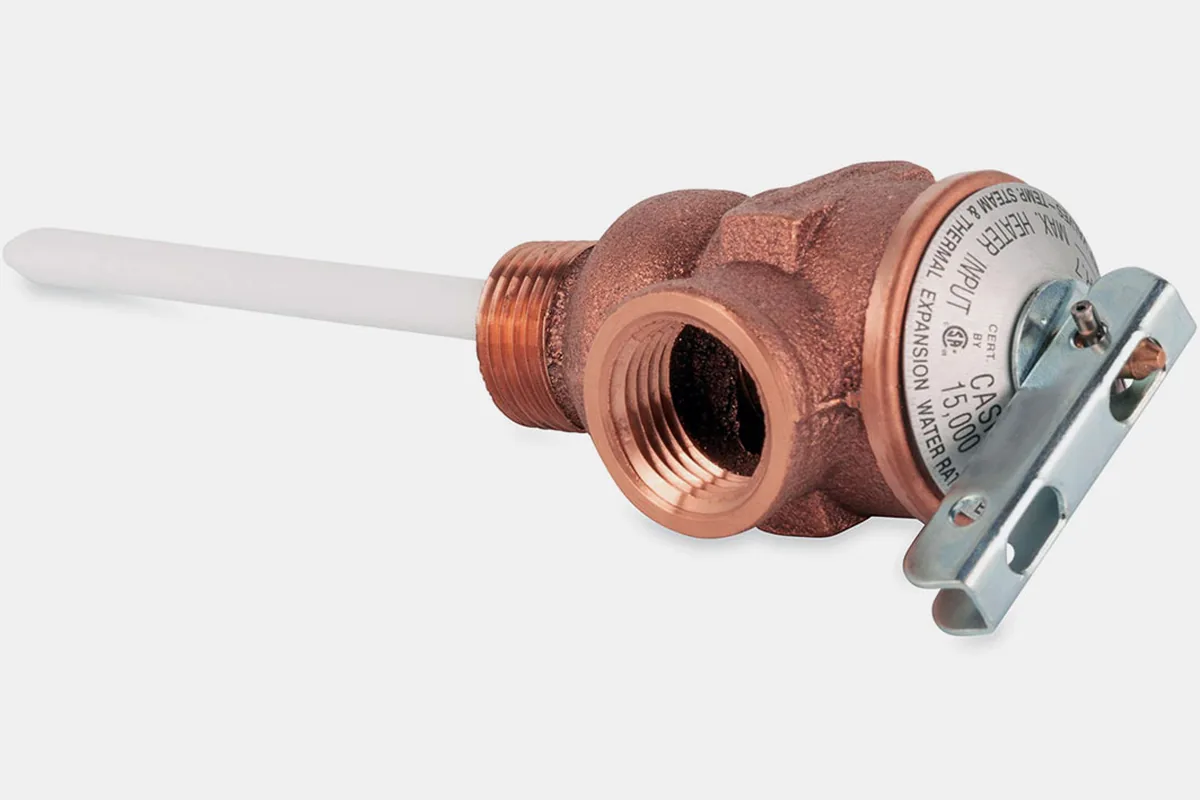
Every tank water heater in your home carries a small brass valve on its side or top with a little metal lever and a pipe running down toward the floor. Most homeowners never touch it and never think about it — until it starts dripping. That unassuming fitting is the temperature-pressure relief valve, usually called the TPR or T&P valve, and it exists for one reason: if the water inside your tank ever overheats or over-pressurizes, the valve opens and vents water and steam before the tank can fail catastrophically. A water heater is a sealed pressure vessel, and a sealed vessel with a stuck thermostat and no working relief valve can rupture with explosive force. The TPR valve is what stands between a broken thermostat and a disaster.
The valve is factory-set to open at 150 pounds per square inch of pressure or 210 degrees Fahrenheit — just below the point where water flashes to steam. It is a simple, spring-loaded mechanical device with no electronics to fail, which is exactly why it is trusted as the final safeguard. But springs weaken, mineral deposits crust the seat, and probes corrode, especially in hard-water areas. When that happens, the valve either starts weeping when it should stay shut, or worse, it may not open when it should. Either condition calls for replacement.
Why Your TPR Valve Is Dripping
A dripping TPR valve is a symptom, and replacing the valve without finding the cause just buys you a new valve that drips too. Here is what we investigate, in order of likelihood:
Thermal expansion in a closed plumbing system
This is the number one cause. When water heats, it expands — roughly 2 to 4 percent in volume. In older open plumbing systems, that extra volume simply pushed back into the city main. But most DeSoto homes now have a check valve, pressure-reducing valve, or backflow preventer on the main line, which creates a closed system: the expanded water has nowhere to go, so pressure spikes every time the heater runs a cycle. The TPR valve does its job and bleeds off the excess. The real fix is a thermal expansion tank on the cold-water line, and we check for one on every TPR service call.
Incoming water pressure running too high
Municipal pressure in parts of DeSoto runs 80 psi or higher, particularly overnight when demand drops. Anything above 80 psi stresses the whole plumbing system — the TPR valve just happens to be the component that complains first. We put a gauge on an outdoor hose bib and check static pressure; if it is high, a pressure-reducing valve protects not just the heater but every fixture and appliance in the house.
A worn or scaled valve
Hard water leaves calcium deposits on the valve seat and corrodes the temperature probe. Once the seat is compromised, the valve weeps continuously or drips after every heating cycle. Valves in DeSoto's mineral-heavy water typically last 5 to 10 years before this sets in.
A waterlogged expansion tank
If your home already has an expansion tank but the TPR valve still drips, the tank's internal bladder has often failed. A quick tap test — a healthy tank rings hollow at the top and dull at the bottom — tells us in seconds, and we confirm with a pressure check of the air charge.
An overheating tank
If the thermostat is stuck and the tank is genuinely approaching 210 degrees, the TPR valve opens for the most serious reason of all. This one comes with scalding-hot tap water and demands immediate attention to both the thermostat and the valve.
The Discharge Pipe Matters as Much as the Valve
The pipe running from your TPR valve down toward the floor is not a drain — it is a scald-protection and visibility device, and plumbing code is specific about it. The discharge pipe must be full-size (no reducing down), made of a material rated for hot water, and terminate 6 to 24 inches above the floor or a drain — close enough that discharging steam does not spray the room, high enough that you can see it. It must pitch downward with no traps or valves, have no threaded end where someone could cap it, and discharge somewhere visible so a homeowner notices when the valve opens.
We find violations constantly in DeSoto homes: discharge pipes reduced to half-inch, pipes threaded at the end with a cap screwed on, pipes run uphill, and pipes terminating inside a wall cavity where a discharge would soak framing unseen for months. When we replace a TPR valve, we inspect and correct the discharge piping as part of the job, because a perfect valve on a blocked or capped discharge line protects no one.
Our TPR Valve Replacement Process
- System diagnosis first. We check static water pressure, look for an expansion tank and test it, and verify the tank is not overheating. Replacing a valve into a system with 95 psi incoming pressure is malpractice — we fix the pressure problem too.
- Safe depressurization. We shut off the cold-water supply and power or gas to the heater, then relieve tank pressure through a hot tap before touching the valve.
- Valve replacement. The old valve unscrews from the tank tapping; we clean the threads, apply proper thread sealant, and install a new ASME-rated valve with the correct temperature probe length for your tank size. Probe length matters — too short and it cannot sense tank temperature accurately.
- Discharge piping correction. We bring the discharge line up to code: full-size pipe, proper termination height, no threads, no valves, visible discharge point.
- Expansion control. If thermal expansion is the root cause, we install or replace the expansion tank, pre-charged to match your home's static water pressure.
- Functional test. We briefly lift the test lever to confirm the valve opens and reseats cleanly, restore the heater to service, and verify no dripping through a full heating cycle.
Never Cap, Plug, or Ignore a Dripping TPR Valve
This deserves its own section because we keep finding capped discharge pipes in DeSoto garages. Someone got annoyed by the dripping, threaded a cap onto the pipe end, and walked away feeling clever. What they actually did was disable the single device preventing a pressure explosion. A water heater with a failed thermostat, a capped relief line, and a closed plumbing system is a bomb with a slow fuse — superheated water flashing to steam expands to roughly 1,600 times its liquid volume, and that energy goes through walls, not around them. If your TPR valve is dripping, the answer is diagnosis and repair, never a cap. If you discover a cap on yours, call us at (833) 713-2101 and do not use hot water until we have checked the system.
The DeSoto Factors Behind TPR Valve Trouble
Local conditions make TPR issues more common here than in many cities. DeSoto's water arrives from the Dallas system moderately hard — around 7 to 8 grains per gallon — and that mineral content shortens TPR valve life noticeably. Calcium crusts the valve seat, the spring chamber scales up, and the temperature probe corrodes faster than it would in soft-water territory. We routinely pull valves from DeSoto heaters that are only six or seven years old and find them already weeping.
Then there is the closed-system problem. As DeSoto's infrastructure has modernized, backflow preventers and check valves have become standard on service lines — good for water safety, but every one of them turns the home's plumbing into a closed loop where thermal expansion has nowhere to go. Many of DeSoto's 1960s- through 1980s-era homes got these devices added during meter upgrades without anyone installing the expansion tank the closed system now requires. The TPR valve becomes the de facto expansion control, dripping a little every heating cycle for years until the valve itself wears out from the constant duty.
Finally, Texas heat plays a quiet role. Summer groundwater and attic temperatures run warm, so heaters cycle with smaller temperature swings but more frequent short burns — and every burn is an expansion event. It adds up to more valve actuations per year than the same heater would see in a cooler climate.
TPR Valve Questions DeSoto Homeowners Ask Us
Is a dripping TPR valve dangerous?
The drip itself is usually the valve doing its job against excess pressure — but it signals a system problem that needs diagnosis. The genuinely dangerous situation is a valve that should be dripping and is not, because it is scaled shut or its discharge is blocked. Either way, have it checked promptly.
Why does my TPR valve only drip at night?
Municipal water pressure typically peaks overnight when neighborhood demand is lowest. If your pressure hovers near the valve's 150 psi rating during the day, the nighttime rise pushes it over. A pressure gauge left on overnight confirms it, and a pressure-reducing valve solves it.
If you replace the valve, do I also need an expansion tank?
If thermal expansion is causing the drip — and it is the most common cause in closed plumbing systems — then yes. A new valve without expansion control will start dripping again as soon as the heater cycles. We test for expansion before quoting, so you only buy what the system actually needs.
How often should the TPR valve be tested?
Manufacturers recommend lifting the test lever once a year to confirm the valve opens and reseats. In DeSoto's hard water, be prepared for the possibility that an older valve will not reseat after testing — which is useful information, because it tells you the valve was already failing and needs replacement.
Can I replace the TPR valve myself?
Physically it unscrews and a new one screws in, but the job involves a pressurized vessel, scalding water, correct probe sizing, discharge-pipe code requirements, and diagnosing the underlying pressure problem. Given that this valve is the heater's primary safety device, professional replacement with full system diagnosis is the responsible choice.
How long does replacement take?
The valve swap itself takes under an hour. If we are also installing an expansion tank or correcting discharge piping, plan on a half-day visit. You will have hot water back the same day in nearly every case.
That Drip Is Trying to Tell You Something — Listen to It
A dripping TPR valve means your water heater's pressure story needs attention, whether the fix is a new valve, an expansion tank, or pressure correction. Our DeSoto technicians diagnose the cause, replace the valve to code, and make sure the whole system is safe. Call (833) 713-2101 now for same-day TPR valve replacement in DeSoto, TX.