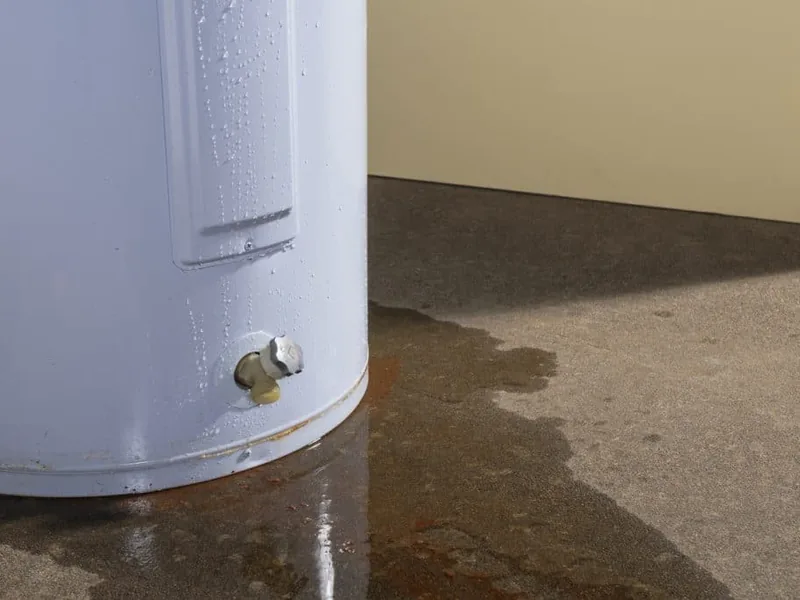
What to Do When Your Water Heater Leaks: Emergency Steps
You walk into the garage and there it is: water spreading across the floor from your water heater. Your heart rate spikes, and the most important thing right now is doing the right things in the right order — because the first ten minutes determine whether this is a service call or a restoration project. This guide gives DeSoto, TX homeowners the exact emergency sequence: what to shut off, what to contain, what to document, and what never to do. Read it now, and you will be ready if it ever happens at your house.
Step 1: Stay Calm and Assess (60 Seconds)
Take one minute to look before you touch. Is water spraying or streaming? That is urgent — move fast through the steps below. Is it a slow drip or dampness? You have time to be methodical. Do you smell gas (rotten-egg odor) near a gas heater? Stop: do not touch electrical switches, do not light anything, leave the area, and call your gas utility's emergency line first, then us. Is water near electrical outlets, the breaker panel, or the heater's wiring? Do not step in standing water near electricity — shut off the breaker from a dry location first. Your safety outranks your flooring, every time.
Step 2: Shut Off the Water to the Heater
Find the cold-water shutoff valve on the pipe entering the top of the heater — usually a lever (quarter-turn ball valve) or a round gate-valve handle. Turn a lever 90 degrees so it sits perpendicular to the pipe; turn a round handle clockwise until it stops. This stops new water from feeding the leak. If that valve is seized or missing (common on older DeSoto installs), shut off the main water valve to the house instead — typically near the street meter or where the line enters the home. Know where your main shutoff is before an emergency; go look today if you are unsure.
Step 3: Shut Off Power or Gas
A water heater with no water inside can destroy itself if the heat stays on — electric elements burn out in seconds when dry-fired, and a gas burner firing on an emptying tank overheats the steel.
- Electric heater: Go to your breaker panel and switch off the breaker labeled for the water heater. If breakers are not labeled, switch off the double-pole (240V) breaker serving it — when in doubt, our technicians can identify it on arrival, but do not leave the heater energized while it leaks.
- Gas heater: Turn the gas control knob on the unit to PILOT or OFF. Pilot keeps the thermocouple lit for an easy restart; OFF is safest if you smell any gas or are unsure. Do not attempt to relight anything yourself during the emergency.
Step 4: Contain the Water
With the supply stopped, limit the damage. Lay towels around the heater's base to wick up spreading water. If the heater has a drain pan, confirm its drain line is actually draining rather than clogged. Move boxes, tools, and anything absorbent away from the wet area. If water is coming through a ceiling below an attic unit, place buckets, poke a small drainage hole in any bulging drywall blister (this sounds destructive but prevents a much larger ceiling collapse), and move furniture. Open the garage door or a window for airflow — moving air dramatically speeds drying and discourages mold.
Noticed water around your heater? Don't wait for it to get worse. Call (833) 713-2101 → for fast help in DeSoto and the surrounding Dallas County area.
Step 5: Drain the Tank (If Needed)
If the leak is substantial — a steady stream rather than a drip — draining the tank removes the water that keeps feeding it. Only do this after completing Steps 2 and 3. Connect a garden hose to the drain valve at the tank's base, run it to a floor drain or outside downhill, open a hot-water tap elsewhere in the house to let air in, then open the drain valve. Let it run until the flow stops. Caution: the first water out is scalding — keep children and pets away, and never open the drain valve before shutting off the heat source. If the drain valve is seized or snaps (old plastic valves do), stop and wait for the technician rather than forcing it.
Step 6: Document Everything
While the situation is fresh, take photos and a short video: the leak source, the water's extent across floors, any damaged items, the heater's rating plate (model and serial number), and the shutoff valves' positions. Note the time you discovered it and what you shut off. This documentation serves three purposes: it helps the technician diagnose faster, it supports any homeowners insurance claim, and it records the unit's age and condition for the repair-vs-replace conversation. Insurers distinguish sudden accidental leaks (often covered) from long-term seepage (usually not) — your timeline matters.
Step 7: Call for Help
Now call a professional. Describe what you see: where the water is coming from (top fitting, side valve, tank base, unknown), whether it is dripping or streaming, the heater's age if you know it, and what you have shut off. That description lets the technician bring the right parts. For DeSoto and surrounding Dallas County, our emergency water heater leak repair line is (833) 713-2101 — if the leak is contained and the water is off, a scheduled visit may serve you just as well at standard rates; if water is still spreading or you smell gas, say so and we will prioritize accordingly. While you wait, our leak detection guide can help you pin down the source.
Ask a Pro → Not sure what you're dealing with? Call (833) 713-2101 and describe what you see — we'll point you in the right direction.
What NOT to Do
- Do not cap or plug the T&P relief valve discharge pipe. If the valve is discharging, it is relieving dangerous pressure — blocking it risks tank rupture. Read our T&P valve guide to understand what the discharge means.
- Do not use stop-leak chemicals or sealants marketed for water heaters. They do not fix corroded steel, they contaminate your hot water, and they make proper repair harder.
- Do not restore power to an electric heater before the tank is full. Dry-firing destroys heating elements almost instantly.
- Do not ignore a "small" leak. Pinhole seeps become streams, often at night or while you are away. A drip today is a decision you get to make calmly; a burst next month is one made for you.
- Do not wade into standing water near the heater's electrical components to reach a valve — kill the breaker from dry ground first.
After the Emergency: Preventing the Next One
Once the immediate crisis is resolved — repaired or replaced — make sure it does not repeat. Ask the technician what caused the failure and what would have caught it earlier. The usual answers: annual flushing to fight DeSoto's sediment, a drain pan with a working drain line (and a water alarm in it), a tested T&P valve, and correct water pressure. Put the maintenance routine from our maintenance checklist on your calendar, and locate every shutoff valve in your home while things are calm — the family members who know where the main water shutoff is are the ones who save the house at 2 a.m.
Book Service → Ready to get it fixed? Call (833) 713-2101 today — same-day appointments available across DeSoto, TX.
Frequently Asked Questions
Should I call at night or wait until morning?
If water is actively spreading, you smell gas, or you cannot stop the flow, call now — waiting multiplies damage. If the leak is stopped (water off), the area is contained, and there is no gas odor, a morning appointment at standard rates is perfectly reasonable.
Can I still use hot water while waiting for repair?
If the leak is minor, the water supply to the heater is still on, and the unit is heating normally, limited use is usually fine — but watch it. If you shut off water or power to the heater, the answer is no until it is repaired.
Will my insurance cover the damage?
Sudden, accidental water heater leaks are commonly covered for the resulting damage to your home (not the heater itself or the plumbing repair). Long-term leaks from neglected maintenance are commonly excluded. Your photos and timeline from Step 6 are your best evidence either way.