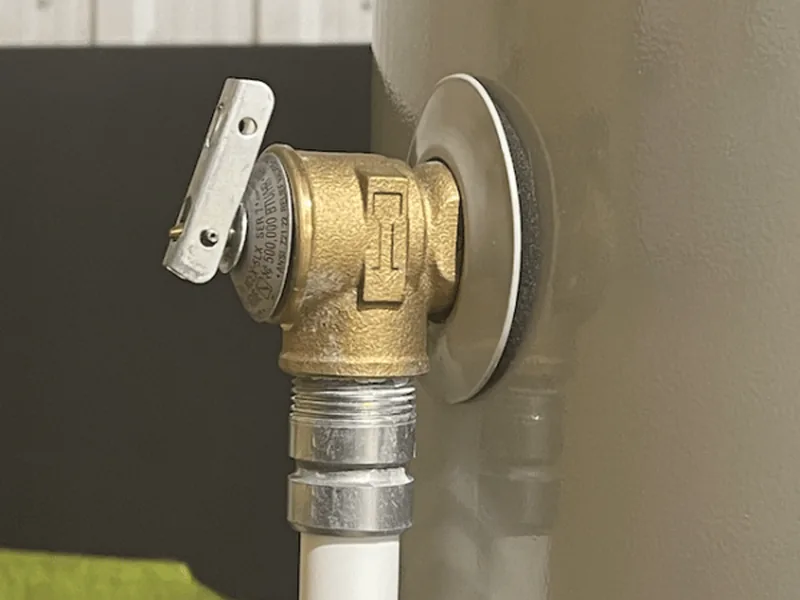
T&P Relief Valve Leaking: What It Means and How to Fix It
See water dripping from the small pipe running down the side of your water heater? That pipe belongs to the temperature-and-pressure (T&P) relief valve — the single most important safety device on the tank. A dripping T&P valve is your water heater trying to tell you something, and the message ranges from "my valve is worn out" to "pressure in this tank is dangerously high." This guide explains what the valve does, why it leaks, how to test it safely, what fixes work, and the one thing you must never do.
DeSoto homeowners see T&P drips more often than they might expect. Many neighborhoods here have pressure-reducing valves and check valves on the water main, which create "closed" plumbing systems where thermal expansion has nowhere to go — and the T&P valve becomes the pressure escape hatch. Understanding that dynamic is the key to fixing the drip permanently instead of just replacing parts.
What the T&P Relief Valve Actually Does
The T&P valve sits near the top of the tank (or on the side, near the top) with a small lever on it and a discharge pipe running down toward the floor. It is designed to open automatically if tank temperature exceeds about 210°F or pressure exceeds 150 psi — conditions that can turn a water heater into a genuine explosion hazard. When it opens, it dumps hot water through the discharge pipe to bring temperature and pressure back down. A valve that drips occasionally during heavy hot-water use may simply be doing this job. A valve that drips constantly, or gushes, is signaling a problem that needs attention.
Why T&P Valves Leak: The 5 Usual Suspects
1. Thermal expansion in a closed system
This is the number one cause in DeSoto. Water expands as it heats — about 2 to 4 percent in volume. In an older "open" plumbing system, that extra volume pushed back into the city main. But modern DeSoto homes typically have a check valve, pressure-reducing valve, or backflow preventer that blocks that path. With nowhere to expand, each heating cycle spikes tank pressure, and the T&P valve weeps to relieve it. The real fix is not a new valve but an expansion tank on the cold water line, which absorbs the extra volume. If your valve drips mainly after the heater runs a full cycle, suspect expansion first.
2. Excessive incoming water pressure
City water pressure in parts of Dallas County can run high — sometimes 90 to 100 psi at the meter. Plumbing fixtures and water heaters are happiest between 40 and 80 psi. Chronically high pressure keeps the T&P valve near its trigger point and shortens the life of every valve and seal in the house. A ten-dollar pressure gauge threaded onto an outdoor hose bib tells you where you stand; if it reads above 80 psi consistently, a pressure-reducing valve adjustment or installation is in order.
3. Overheating from a failed thermostat
If a thermostat sticks closed, the heating element (or gas burner) never shuts off, and tank temperature climbs toward the valve's 210°F trip point. Warning signs include scalding tap water, steam or rumbling from the tank, and the reset button tripping. This is the most dangerous cause on the list — treat suspected overheating as urgent and see our thermostat replacement guide for diagnosis steps.
4. A worn-out valve
T&P valves contain a spring and a rubber seat that degrade with age, heat, and mineral deposits. A valve older than five or six years may simply stop sealing — dripping or dribbling even when temperature and pressure are normal. Mineral crust around the valve outlet is a telltale sign. Replacement is straightforward and inexpensive, and it is a core part of our T&P valve replacement service.
5. Debris under the seat
Sediment or a flake of scale can lodge under the valve seat after the valve lifts (for example, right after you test it — see below), preventing it from resealing. Sometimes a single careful re-test flushes the debris; if the drip persists, replacement is the answer.
How to Test Your T&P Valve Safely
Manufacturers recommend testing the valve once or twice a year. Here is the safe procedure: place a bucket under the discharge pipe, then gently lift the test lever for a few seconds. Hot water should flow strongly from the discharge pipe, then stop completely when you release the lever. If no water flows, the valve may be seized shut — replace it promptly, because a valve that cannot open cannot protect you. If water keeps dribbling after release, debris or a worn seat is the issue. Caution: the discharged water is scalding hot, and on older valves, testing can disturb a fragile seal and start a drip that was not there before. If your valve is more than five years old and has never been tested, many technicians recommend simply replacing it rather than testing it.
Ask a Pro → Not sure what you're dealing with? Call (833) 713-2101 and describe what you see — we'll point you in the right direction.
The One Thing You Must Never Do
Never cap, plug, or restrict the discharge pipe — and never replace the valve with a plug. It is tempting when a drip is staining the garage floor, but a disabled relief valve removes the tank's last line of defense against overpressure. Every year, water heaters with defeated relief valves cause catastrophic tank ruptures. If the drip bothers you, fix the cause (expansion tank, pressure regulation, new valve) — never silence the messenger.
Fixing a Leaking T&P Valve
The fix depends on the cause you identified. For a worn or debris-fouled valve: shut off water and power/gas to the heater, drain a few gallons from the tank to drop the water level below the valve, unscrew the old valve, wrap the new valve's threads with Teflon tape, thread it in, reconnect the discharge pipe, refill, and restore power. For expansion-related dripping: have an expansion tank installed and charged to match your home's water pressure — this solves the root cause so the new valve is not subjected to the same daily pressure spikes. For high incoming pressure: address it with a pressure-reducing valve. For overheating: diagnose the thermostat or gas control before touching the relief valve.
If you would rather not handle scalding water and 150-psi plumbing yourself, our technicians handle the full diagnosis — pressure test, expansion check, and valve replacement — in one visit. Homes with active drips can also check our guide to leak detection in DeSoto for tracking down exactly where the moisture originates.
Noticed water around your heater? Don't wait for it to get worse. Call (833) 713-2101 → for fast help in DeSoto and the surrounding Dallas County area.
Frequently Asked Questions
Is a dripping T&P valve an emergency?
A slow drip is rarely an immediate emergency, but do not ignore it. If the discharge is a steady stream, the water is steaming, or tap water is scalding, treat it as urgent and call the same day.
How often should a T&P valve be replaced?
Every 4 to 6 years is a sensible interval, or sooner if testing shows it will not seal. They are inexpensive compared to the protection they provide.
Can I just tighten a dripping T&P valve?
If water is seeping from the threaded connection (not the discharge pipe), gentle tightening may help. But water coming through the discharge pipe means the valve is opening or failing to seal — tightening changes nothing.