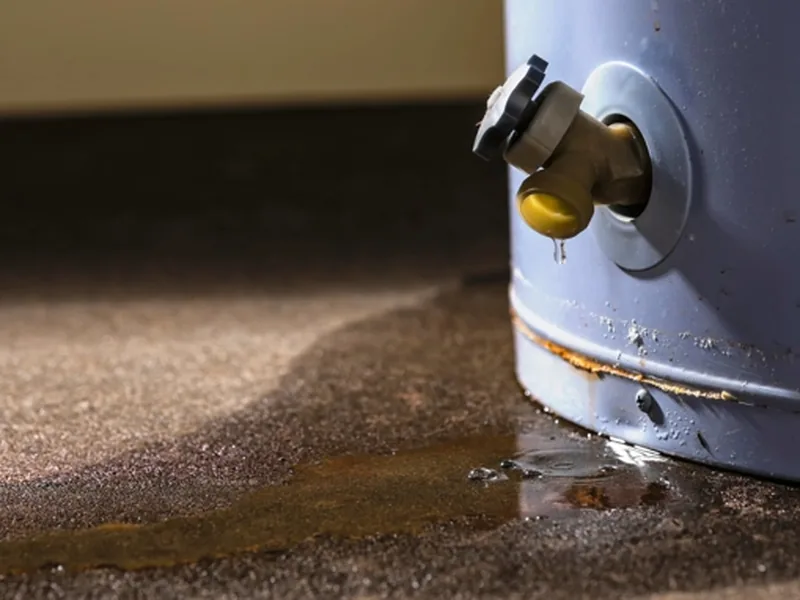
Water Heater Leak vs. Condensation: How to Tell the Difference
Not every puddle under a water heater is a leak. Water heaters routinely produce condensation — real water, but from humidity in the air rather than from inside the tank — and in a humid climate like North Texas, "sweating" can look alarming enough to send homeowners reaching for the phone. Calling a technician for condensation wastes a service visit; ignoring a genuine leak wastes far more. This guide teaches you how to tell the two apart with confidence, explains when condensation itself signals a problem, and covers the DeSoto-specific conditions that make sweating especially common here.
Why Water Heaters Sweat
Condensation forms when warm, humid air meets a cold surface — the same physics as a sweating glass of iced tea. A water heater offers several cold surfaces: the cold-water inlet pipe, the tank jacket when the unit is full of cold water after heavy use, and the flue or vent on gas units during startup. DeSoto garages are prime condensation territory: they are unconditioned, they trap humid Gulf air in summer, and concrete floors stay cool, keeping the air near the heater damp. A brand-new heater filled with cold water for the first time can sweat noticeably for a day or two until the tank reaches temperature — completely normal.
Common Condensation Spots (and What They Look Like)
- Cold-water inlet pipe. The most common sweat spot. Fine droplets beading on the cold pipe and its fittings, sometimes dripping onto the top of the heater and running down. The water is clear and the pipe feels cold.
- Tank jacket after heavy use. After back-to-back showers refill the tank with cold water, the steel jacket can sweat lightly for an hour or so, especially in a humid garage.
- Flue and draft hood (gas units). At startup, combustion gases are cool enough that water vapor condenses inside the flue, sometimes dripping back down around the draft hood. This usually stops once the flue heats up.
- Tankless condensate. High-efficiency condensing units produce condensate by design — if the drain line is working, you will see water at the drain termination, which is normal operation, not a leak.
Condensation shares a few traits: the water is clear and odorless, it appears during humid weather or after heavy hot-water use, it forms on cold surfaces, and it stops on its own as conditions change.
The Dry-and-Watch Test: Leak or Condensation?
This simple test settles the question in most cases. Step 1: Dry the heater, pipes, and floor completely with towels. Step 2: Avoid using hot water for two to three hours so the tank sits undisturbed. Step 3: Check with a flashlight. If moisture has returned without any hot water being used — especially as a steady drip from a fitting, valve, or seam — you have a leak, because condensation needs airflow and temperature swings that a resting tank mostly does not produce. Step 4: If the area stayed dry, run hot water for ten minutes and check again. Moisture that appears only during or right after a heating cycle, beading on cold surfaces, points to condensation. For a trickier case, the paper towel test localizes exactly which component is wet.
Ask a Pro → Not sure what you're dealing with? Call (833) 713-2101 and describe what you see — we'll point you in the right direction.
When "Just Condensation" Is Actually a Problem
Condensation earns its harmless reputation only in moderation. Call it a problem when:
- It never dries. Chronic sweating keeps the tank jacket and fittings damp around the clock, accelerating rust. A tank that is always wet on the outside will corrode faster on the inside-adjacent steel.
- It is flue condensation that persists. If a gas unit's flue drips long after startup, every cycle, the vent may be oversized, improperly sloped, or the unit may be short-cycling — all worth professional attention, since chronic flue condensation rots vents and can spill combustion byproducts.
- It masks a real leak. This is the sneaky one. Homeowners who decide "it is just sweating" stop looking — while a slow fitting weep continues underneath the condensation story. If the moisture has any color, leaves mineral deposits, or appears even in dry weather with the tank at rest, treat it as a leak and read our leak detection guide.
- It is actually the T&P valve. Water at the end of the relief valve's discharge pipe is never condensation. See our T&P valve leaking guide to diagnose it.
Reducing Condensation in DeSoto Homes
You cannot change Texas humidity, but you can reduce its effect. Insulating the cold-water inlet pipe with foam sleeves eliminates the most common sweat spot outright. Improving garage ventilation — even cracking a vent or adding a louvered vent panel — lowers the humidity bathing the heater. A dehumidifier in an enclosed utility room works wonders during August and September. Keep the area around the heater clear so air circulates rather than pooling damp against the jacket. And make sure the drain pan under the heater is intact with a working drain line, so whatever moisture does form has somewhere harmless to go.
Quick-Reference: Leak or Condensation?
- Water is rusty, white-crusted, or warm → leak.
- Steady drip with no hot water use → leak.
- Water only at the T&P discharge pipe → valve issue, not condensation.
- Clear droplets on cold pipes in humid weather, drying on their own → condensation.
- Light sweating on a new install for a day or two → normal condensation.
- Moisture that never fully dries for weeks → get it checked, whatever the cause.
When in doubt, err on the side of checking. A ten-minute inspection that confirms harmless sweating buys real peace of mind — and the one time it turns out to be a genuine weep, early detection saves the flooring.
Noticed water around your heater? Don't wait for it to get worse. Call (833) 713-2101 → for fast help in DeSoto and the surrounding Dallas County area.
Frequently Asked Questions
Can condensation damage my water heater?
Occasional light sweating, no. Chronic dampness, yes — persistent moisture accelerates exterior rust and can corrode fittings, the jacket, and the platform the heater sits on.
Why does my water heater sweat more in summer?
Summer brings the highest humidity and the warmest air into DeSoto garages, maximizing the temperature gap between humid air and cold pipes. It is the peak season for harmless sweating — and the peak season for misdiagnosed leaks.
Should I wrap my whole water heater in insulation to stop sweating?
No — insulating the tank jacket traps moisture against the steel and hides developing leaks. Insulate the cold-water pipes, ventilate the space, and leave the tank itself visible for inspection.