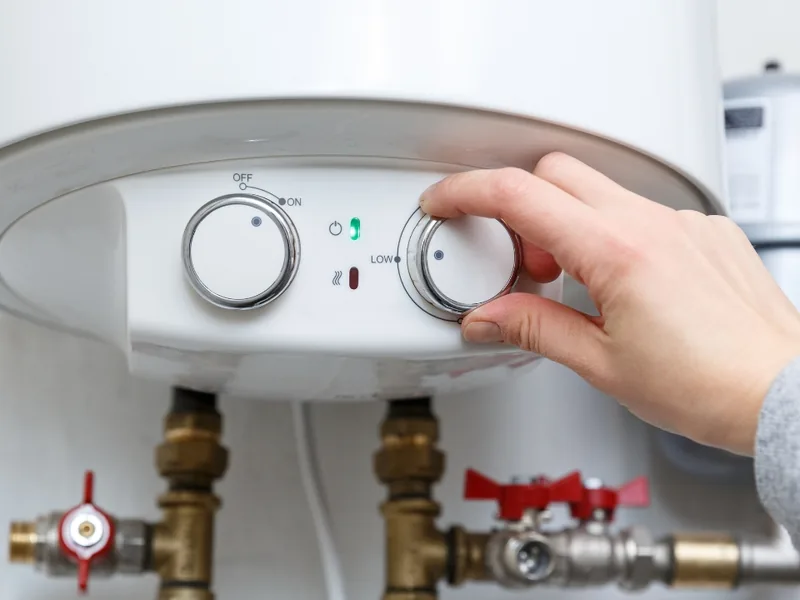
Water Heater Thermostat Replacement: A Complete Guide
The thermostat is the brain of your water heater — the small device that decides when the heating elements or burner fire up and when they shut off. When it fails, the symptoms are hard to miss: ice-cold showers, scalding-hot water, or a unit that constantly trips its reset button. The good news is that a bad thermostat is one of the most common and most affordable water heater repairs. This guide explains how to recognize thermostat failure, how to test it, how replacement works on a standard electric tank heater, and — just as important — when to put the tools down and call a professional in DeSoto, TX.
A quick note on gas heaters: most gas tank water heaters do not have a separate thermostat like electrics do. Temperature control lives inside the gas control valve assembly on the side of the tank. If you have a gas unit with temperature problems, the issue is usually the gas control valve or thermocouple rather than a standalone thermostat. The testing and replacement steps below apply to electric tank heaters, which are common in DeSoto-area homes.
Signs Your Water Heater Thermostat Is Failing
Thermostats usually fail in one of two ways: stuck open (never calling for heat) or stuck closed (never shutting heat off). Watch for these symptoms:
- No hot water at all. If the breaker is fine and the reset button has not tripped, a dead upper thermostat is a prime suspect.
- Water runs out too fast. Electric heaters use an upper and lower thermostat working in sequence. If the lower one fails, only the top portion of the tank heats, and hot water disappears quickly.
- Water is dangerously hot. A thermostat stuck closed lets the element heat indefinitely. If water from the tap is scalding (well above your 120°F setting), treat it as urgent — overheating can trigger the T&P relief valve or damage the tank.
- The reset (ECO) button keeps tripping. The high-limit reset trips when water overheats. If you reset it and it trips again within a day or two, the thermostat is likely not cutting power when it should.
- Inconsistent temperatures. Showers that swing hot and cold without pattern often trace back to a thermostat that is intermittently sticking.
Before blaming the thermostat, rule out the obvious: check the breaker, press the reset button once, and confirm the temperature dials are actually set to 120°F. If problems persist, testing is the next step. And if water is actively leaking anywhere around the unit, skip the electrical diagnosis and read our leak detection guide first — water and electricity are a dangerous combination.
Safety First: Non-Negotiable Precautions
Replacing an electric water heater thermostat means working inches from 240-volt wiring. This is not a casual DIY task, and if any step below makes you uncomfortable, stop and call a professional — there is no shame in it, and it is far cheaper than a hospital visit. The mandatory precautions:
- Turn off the breaker serving the water heater and lock or tape the panel so nobody flips it back on.
- Verify power is truly off with a non-contact voltage tester at the heater's junction box and at the thermostat terminals.
- Never work on the unit while the access panels are off and power could be restored.
- Wear insulated gloves and keep the work area dry.
Ask a Pro → Not sure what you're dealing with? Call (833) 713-2101 and describe what you see — we'll point you in the right direction.
How to Test a Water Heater Thermostat
You will need a multimeter and a screwdriver. With power confirmed OFF and the access panels and insulation removed, you can see the upper thermostat (with the reset button) and the lower thermostat behind their own covers.
Continuity test: Set your multimeter to continuity or resistance. Disconnect one wire from the thermostat terminal (so you test the device, not the circuit). A working thermostat at room temperature — below its set point — should show continuity (near-zero resistance) across its terminals, because it is "calling for heat." Now gently warm the thermostat's sensor surface with a hair dryer for 30 to 60 seconds; a good thermostat will click and open the circuit (infinite resistance). If it never shows continuity, or never opens when heated, it has failed.
Which one to replace? Test both. As a rule of thumb: no hot water at all points to the upper thermostat; hot water that runs out quickly points to the lower. Because thermostats are inexpensive and tend to age together, many technicians replace both at once — and often the heating elements too, since heating element failure produces overlapping symptoms and the labor overlaps.
Step-by-Step Thermostat Replacement (Electric Tank Heaters)
1. Kill the power and verify. Breaker off, voltage tester confirms dead at the heater. This step is repeated because it is the one that matters most.
2. Remove the access panels. Electric heaters have two panels (upper and lower) held by screws. Behind each is a layer of insulation — fold it back, and you may find a plastic safety cover over the thermostat.
3. Document the wiring. Take a clear photo of every wire connected to the old thermostat. Thermostat wiring must go back exactly as it was.
4. Disconnect and remove. Loosen the terminal screws, pull the wires free, and unclip the thermostat from its mounting bracket against the tank wall.
5. Install the new thermostat. Buy the exact replacement type for your heater's voltage and wattage (bring the old one to the supply house if unsure). Clip it firmly against the tank — the sensor must sit flat against the steel to read temperature accurately — reconnect wires per your photo, and set the dial to 120°F.
6. Reassemble and restore power. Replace insulation, plastic covers, and access panels, then turn the breaker back on. Allow a full heating cycle and check water temperature at a tap with a thermometer; it should read close to your setting.
When to Call a Professional Instead
Call a pro if you find scorched or melted wiring (a sign of a dangerous loose connection), if the tank itself is leaking, if the reset button trips repeatedly after replacement, or if you have a gas unit rather than electric. Also consider professional thermostat replacement service if the heater is over ten years old — at that age, the money is often better put toward evaluating the whole unit, since a failing thermostat can be the first of several end-of-life failures. Our technicians carry both thermostats on the truck, so most replacements in DeSoto are completed in a single visit.
Book Service → Ready to get it fixed? Call (833) 713-2101 today — same-day appointments available across DeSoto, TX.
Frequently Asked Questions
How much does thermostat replacement cost?
The part itself is inexpensive; most of the cost is the service visit and labor. Replacing both thermostats (and often the elements) in one trip is usually the best value since the tank is already opened up.
Should I replace the heating elements at the same time?
If your heater is more than six or seven years old, yes — elements and thermostats age together, and doing both at once saves a second service call a few months later.
Why does my reset button keep tripping after I replaced the thermostat?
Either the new thermostat is miswired or not sitting flat against the tank, the high-limit switch itself is faulty, or an element is shorted to ground. If a careful recheck does not solve it, call for professional diagnosis.