IN SHORT: Electric water heaters heat with two elements, upper and lower, that burn out from age, sediment burial, or dry-firing. The symptoms tell the story: no hot water points to the upper element, water that runs out fast points to the lower. We test both elements with a multimeter, replace only what has failed, and restore hot water the same visit.
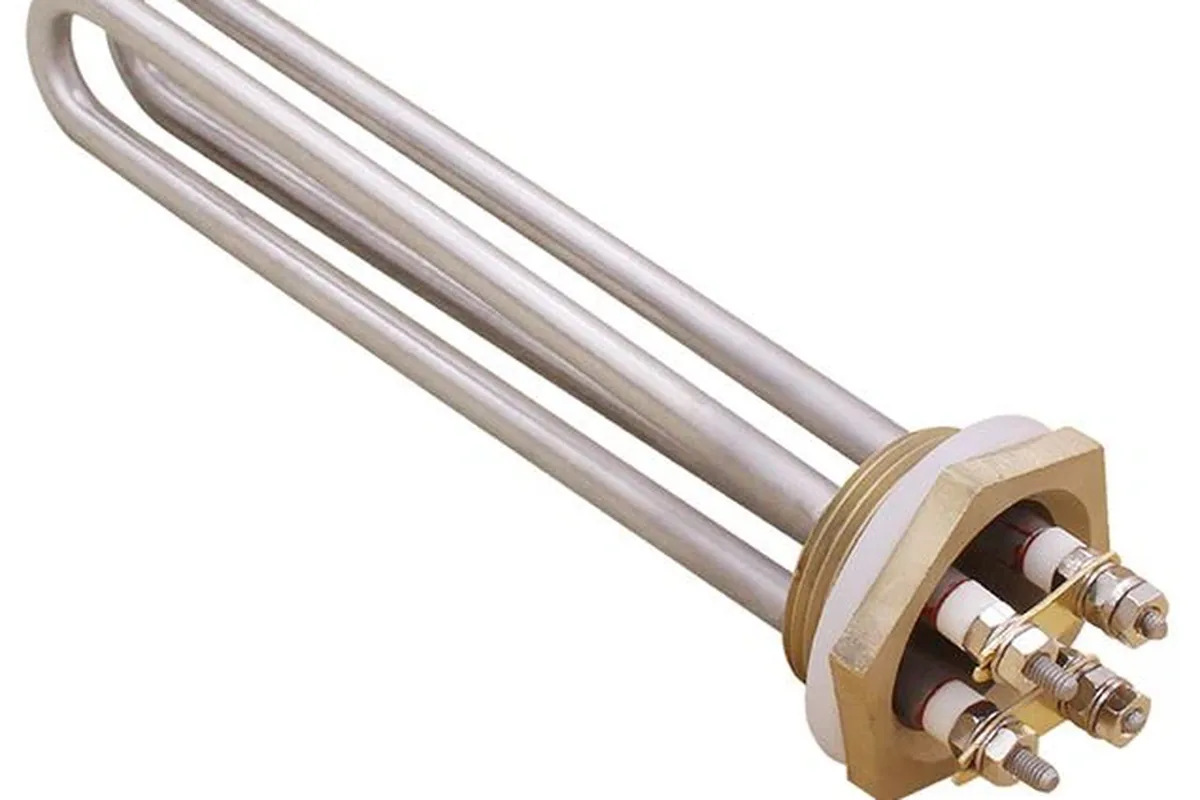
An electric water heater has no flame and no burner. Its heat comes from two electric elements, metal-sheathed resistance coils that screw into the side of the tank, one near the top and one near the bottom. When they are healthy, you never think about them. When one fails, your shower tells you within a day: water that never gets hot, hot water that runs out in minutes, or a little red reset button that keeps tripping.
Heating elements are consumable parts with a hard life, especially in DeSoto. They sit immersed in mineral-heavy water, the lower one often buried in sediment, cycling on and off for years. Replacement is one of the most common electric heater repairs we perform, and it is also one of the most misdiagnosed: thermostats, breakers, and wiring cause identical symptoms. This page explains how dual-element heaters work, why elements die, how we prove which part failed before replacing anything, and how the swap is done without wrecking the new element on day one.
How Dual-Element Electric Heaters Actually Work
The two elements never run at the same time. When you draw hot water, cold water enters the bottom of the tank and the upper thermostat senses the temperature drop first, sending power to the upper element. Once the top of the tank is back up to temperature, control passes to the lower thermostat and the lower element reheats the bottom. This sequential design keeps recovery fast without doubling the electrical load, which is why a typical residential heater runs on a 30-amp, 240-volt circuit even though it carries two 4,500-watt elements.
Each element has its own thermostat, and the upper thermostat also carries the high-limit reset button, the little red button behind the access panel. If either thermostat misreads, or if an element fails, the choreography breaks down and you get the classic symptom patterns described below. Understanding which element does what is what makes diagnosis possible instead of guesswork.
Why Heating Elements Burn Out
- Sediment burial. The number-one killer in DeSoto. Mineral silt settles on the tank bottom and packs around the lower element, insulating it from the water. The element keeps pumping out heat that cannot escape, overheats itself, and burns through its sheath. A rumbling, popping tank is the sound of this happening.
- Plain age. Thousands of heating cycles expand and contract the element sheath. After eight to twelve years, metal fatigue and scale intrusion win.
- Dry-firing. If power reaches an element while it is surrounded by air instead of water, even for under a minute, the element destroys itself. This happens after draining work when someone restores power before the tank is full and purged.
- Voltage problems. Loose connections at the element terminals arc and overheat, and chronic over-voltage shortens element life. We inspect terminals during every replacement.
- Manufacturing variance. Occasionally an element is simply defective. When a new element fails within months, we look hard at installation conditions before blaming the part.
Symptoms That Point to a Dead Element
The pattern of the failure usually names the culprit before we open a panel. No hot water at all points to the upper element or upper thermostat, since the upper element heats first and nothing downstream works without it. Hot water that runs out unusually fast points to the lower element: the top of the tank heats fine, but the bottom never recovers, so your usable hot water is a fraction of normal. The reset button keeps tripping often means an element has shorted to ground through a breached sheath, overheating the tank and tripping the high limit; resetting it repeatedly without fixing the cause is asking for trouble. A tripped breaker can indicate the same grounded-element short. Rumbling plus short hot-water supply together usually mean sediment has buried the lower element.
Diagnosis Before Replacement: The Multimeter Tells the Truth
We never replace an element on symptoms alone, because thermostats and wiring fail with identical signatures. The procedure starts with safety: breaker OFF, then verified dead with a non-contact tester and a meter, because 240 volts is unforgiving. With power confirmed off, we disconnect the element wires and measure resistance across the element terminals. A healthy 4,500-watt element reads roughly 10 to 16 ohms; an open circuit, infinite resistance, means a burned-out element. Then we test from each terminal to the tank's metal shell: any continuity there means the sheath has breached and the element is shorted to ground, which explains tripped resets and breakers.
We run the same tests on both elements and check both thermostats for proper switching. Only then do we quote the repair, and the quote covers exactly what failed. If both elements test bad in a heavily scaled tank, we will show you the readings and discuss whether element replacement or a new heater is the better value, because there is a point where the math favors replacement.
How We Replace a Heating Element, Step by Step
- Power off and verified dead. Breaker off, panel locked or tagged, and zero voltage confirmed at the heater with a meter. This step is never skipped or rushed.
- Drain below the element. Cold inlet closed, a hot tap opened to vent, and the tank drained below the failed element's level. If the tank has never been flushed, we often flush sediment while we are set up for it.
- Remove the access panel and insulation. The element hides behind a cover and a pad of insulation, with its wiring terminals exposed once those come off. We photograph the wiring before disconnecting anything.
- Extract the old element. An element wrench fits the hex flange; seized elements get penetrating oil and steady torque, never brute force that could damage the tank threads.
- Clean the seat and install the new element. The gasket surface is cleaned of scale and old gasket material, a new gasket goes on with the element, and it is tightened to a firm seal. We match wattage and voltage to the original specification and, in hard-water homes, often recommend low-watt-density elements whose larger surface runs cooler and resists scale burnout longer.
- Refill completely and purge every trace of air. Cold supply reopened, hot taps run until water flows solid with no sputtering. This is the step that prevents dry-firing the brand-new element.
- Restore power and verify under load. Breaker on, then we measure actual amperage draw against the element's rating and confirm the thermostats cycle correctly. You get hot water back the same visit.
DeSoto's Hard Water Is an Element Killer
DeSoto's municipal supply lays down calcium and magnesium scale aggressively, and inside a water heater that scale does not just coat the tank walls; it coats the elements themselves. A scaled element is an insulated element: heat cannot transfer efficiently into the water, so the element's internal temperature climbs while the water stays lukewarm. The sheath eventually fails from the overheating, sometimes splitting open and shorting to ground, which is why scaled tanks produce so many tripped reset buttons.
The defense is the same unglamorous maintenance that protects everything else in the tank: an annual flush to keep sediment from burying the lower element, and element selection that respects the water. Low-watt-density elements spread their heat over more surface area, running cooler at every point, and they survive DeSoto water noticeably longer than standard high-density elements. When we replace elements here, we size the part for the water, not just the tank.
Element vs. Thermostat vs. New Heater: The Honest Call
Not every element failure deserves just an element. If one element died of old age in an otherwise healthy eight-year-old tank, replacement is the obvious value. If both elements and a thermostat have failed in a twelve-year-old tank with inches of sediment and a weeping drain valve, the combined repair cost starts approaching the value of what you are saving, and we will lay out both numbers so you can decide. Our rule is straightforward: we fix what is economically fixable and say so when it is not. A new element in a dying tank helps no one, and we would rather earn the replacement job honestly than sell you a repair that fails in a year.
Cold Shower This Morning? Get Hot Water Back Today
Element failures are same-visit repairs in most cases. Water Heater Leak Repair Specialists tests both elements and both thermostats, replaces only what failed, and verifies the repair under load. DeSoto, TX — call (833) 713-2101 now.