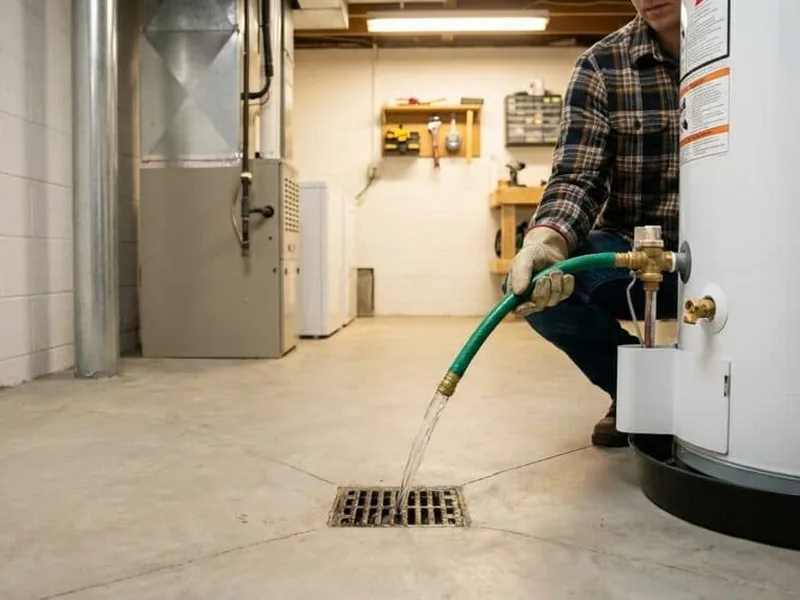
At the bottom of your water heater sits a small spigot that most homeowners never touch — the drain valve. Its job is to let you flush sediment from the tank and to drain the tank for service. But this small valve is one of the most common sources of water heater leaks in DeSoto homes. A slow drip from the drain valve can look harmless, yet it can waste gallons of water, damage flooring, and signal deeper problems. This guide explains why drain valves leak, what you can safely try yourself, and when replacement is the right call.
What the Drain Valve Does
The drain valve threads into the bottom of the tank, usually at the front. Technicians use it to flush sediment — the sand-like mineral buildup that settles at the bottom of every tank, especially in Texas hard-water areas — and to empty the tank for repairs or replacement. There are two common types: cheap plastic valves that come standard on many heaters, and brass valves, which are far more durable. If your DeSoto water heater still has its original plastic drain valve, that plastic is a likely failure point after years of heat cycles.
Why Drain Valves Start Leaking
- Mineral and sediment buildup. Flushing the tank stirs up sediment, and grit can lodge in the valve seat so it never seals fully again. This is the number one cause of drain-valve drips after a homeowner's first flush.
- Worn or cracked plastic. Heat, pressure, and age make plastic valves brittle. The handle or stem cracks, or the seal inside fails.
- Corroded threads or washer. Galvanic corrosion at the valve-to-tank connection eats the seal over time.
- High water pressure. Pressure above 80 PSI stresses every fitting on the heater, and the drain valve is often the first to weep. DeSoto homes on high-pressure municipal feeds should have a thermal expansion solution in place.
- Disturbed during flushing. Turning a valve that has sat untouched for a decade can be the moment it starts dripping — a classic catch-22 for first-time flushers.
What You Can Safely Try First
If you notice a slow drip, you can try a few safe steps before calling for service. First, confirm the water is actually coming from the drain valve and not running down from a fitting above — dry the area and watch where the drip forms. Place a bucket or towel under the valve to contain the drip. Gently tightening the valve handle (clockwise, just snug — never force it) sometimes stops a drip from a slightly open valve. If the valve has a hose cap, make sure the cap and its washer are tight.
One safe trick: briefly open and close the valve with a bucket under it. Sometimes a quick flush clears the grit trapped in the seat and the valve reseats. But if the valve is plastic and the drip continues, do not keep forcing it — a cracked plastic valve can snap and dump the tank's contents onto your floor. If you see a steady stream rather than a drip, that is no longer a minor problem; call for emergency water heater service right away.
How a Professional Replaces a Drain Valve
Valve replacement is a quick job for a technician: shut off water and power or gas, drain the tank down below the valve, unscrew the old valve, and install a new brass ball-valve style drain with proper thread sealant. Brass ball valves are a meaningful upgrade — they drain faster, seal reliably, and handle sediment better than plastic gate-style valves. The technician also checks tank pressure, the anode rod, and the temperature-pressure relief valve while the tank is drained, turning a small repair into a useful mini-inspection.
Preventing Future Drain Valve Problems
The best prevention is routine flushing — once a year in DeSoto's hard water keeps sediment from cementing the valve shut and makes each flush gentler on the valve seat. When the heater is eventually replaced, ask for a full-port brass drain valve from day one. And keep your water pressure in the 40–60 PSI range with a working pressure regulator and expansion tank, which reduces stress on every seal in the system.
When to Call Instead of DIY
Call a professional if the valve drips after your reseating attempts, if the valve body is cracked, if the leak is more than a slow drip, or if you see rust around the valve threads — rust there can mean the tank itself is corroding at the fitting, which a new valve will not fix. Also call if you are not comfortable shutting off the water and power or gas to the unit safely.
Leaking drain valve in DeSoto? Call Water Heater Leak Repair Specialists at (833) 713-2101. We replace drain valves fast — usually same-day — and check the rest of your system so one small leak does not turn into a big one.