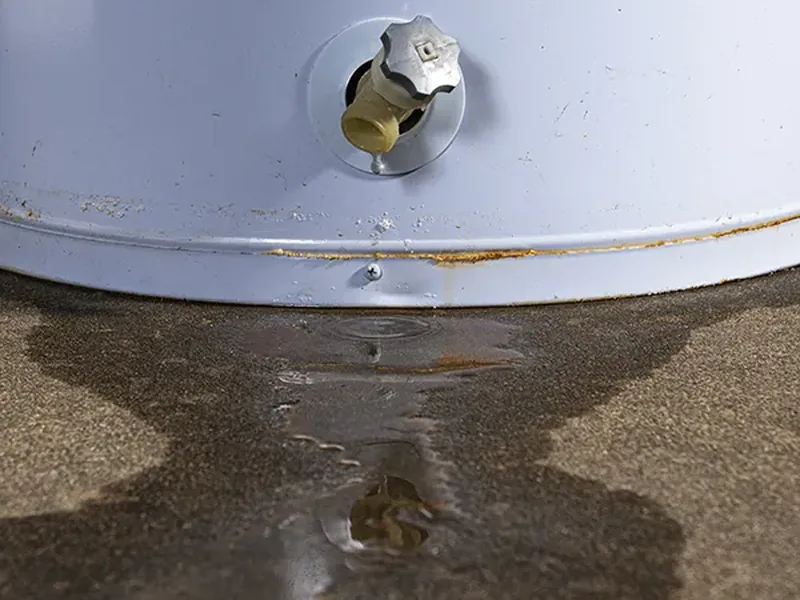
Water heater leaks rarely start as floods. They start as clues — a damp spot, a rust streak, a sound you have not heard before. Learning to read those early signs is the difference between a scheduled repair and an emergency replacement with water damage on top. Here are the signs DeSoto homeowners should watch for, what each one means, and what to do about it.
1. Water Pooling Around the Base
The most obvious sign and the most serious. Water collecting under or around the heater — especially if it returns after you dry it — means something is leaking now. Check whether it is coming from a fitting above (repairable) or from the tank body itself (usually replacement). Either way, do not wait: put a bucket or towels down, shut off the supply if the flow is more than a drip, and call for water heater leak repair in DeSoto.
2. Rust, Corrosion, or Rust-Colored Water
Rust on the tank exterior, rust streaks running down from fittings, or rusty hot water from the tap all point to corrosion inside the system. A rusty anode rod connection or rust around the TPR valve suggests the tank's defenses are failing. If only the hot water is discolored, the problem is in the heater or hot-water piping — not the city supply.
3. Dripping Valves or Fittings
Drips from the drain valve, the TPR valve discharge pipe, or the inlet and outlet connections on top of the tank are common and often fixable. A dripping TPR valve deserves special attention: it can mean excessive pressure or temperature, not just a bad valve. Never plug it — investigate the cause.
4. Strange Noises
Popping, rumbling, or cracking during heating means sediment is boiling through mineral layers at the tank bottom — in DeSoto's hard water, this is extremely common and it accelerates tank wear. Hissing can mean a leak flashing to steam on a hot surface. New noises from an old heater are always worth a professional listen.
5. Hot Water Problems
Water that runs out faster than it used to, never gets fully hot, or fluctuates in temperature can signal sediment displacing capacity, a failing element or thermostat, or a broken dip tube mixing cold water into the hot outlet. These are not leaks themselves, but they often travel with the same neglect that causes leaks.
6. Age and a Musty Smell
A heater past ten years is living on borrowed time — plan accordingly. A musty or damp smell around the heater, even with no visible water, can mean a slow leak is soaking insulation, drywall, or the pan beneath the unit. Slow leaks cause mold and rot long before they cause puddles, and hidden moisture keeps damaging framing silently behind walls.
7. Higher Bills and Damp Drywall
A heater working overtime through sediment uses more gas or electricity, so an unexplained bump in utility bills is a soft sign of internal problems. Damp, soft, or stained drywall near the heater — or on the ceiling below an upstairs unit — means water is going where it should not.
What to Do When You Spot a Sign
First, confirm it: dry the area and see if moisture returns, and rule out condensation in humid weather. Second, contain it with towels or a bucket. Third, decide the urgency — active flow, gas smell, or electrical risk means shut everything down and call now; a slow drip means schedule within days. And resist the urge to seal a tank leak with epoxy or tape: it will not hold, and it hides the real problem from the technician who needs to see it.
How a Professional Pinpoints the Source
When the source is not obvious, technicians work methodically: dry everything, then watch where moisture returns first; check each fitting and valve with tissue to catch slow weeps; test system pressure to rule out expansion problems driving TPR discharge; and inspect the tank jacket for rust trails that reveal where water is traveling inside. On gas units they also check whether leaking water has reached the burner or controls, since that changes the repair calculus. This diagnostic process is quick for a pro and it matters — misdiagnosing a tank-body leak as a valve drip wastes money on parts that cannot fix the real problem. If your heater is due for its yearly checkup anyway, a comprehensive maintenance inspection in DeSoto catches these early signs before they become the puddle that prompted this article.
Seeing any of these signs in DeSoto? Call Water Heater Leak Repair Specialists at (833) 713-2101. We will find the source, tell you honestly whether it is a repair or a replacement, and stop a small sign from becoming a big bill.