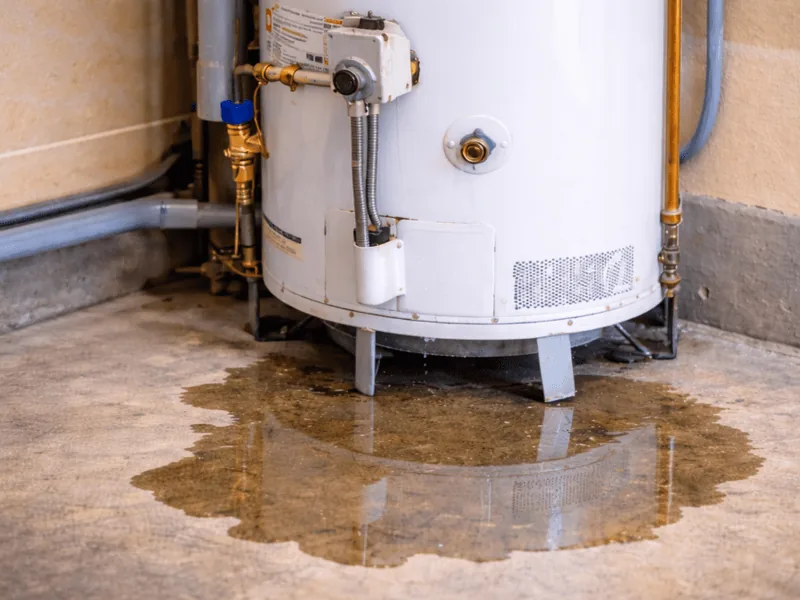
You spot water around your water heater and the first question is the right one: is this an emergency? The honest answer is that it depends on the leak. Some water heater leaks are slow seeps you can monitor for a day; others can flood a room in an hour or signal a dangerous pressure problem. This guide helps DeSoto homeowners tell the difference, with a clear decision framework and the steps to take in each case.
Signs It IS an Emergency — Act Now
Call for emergency service immediately if you see any of these:
- A steady stream or spray of water, not a drip. A pressurized leak can empty a 50-gallon tank into your home fast.
- Water pooling and spreading across the floor, soaking drywall, or dripping through a ceiling below.
- The temperature-pressure relief (TPR) valve discharging heavily. This means pressure or temperature is dangerously high — do not cap it, shut the unit down.
- Any smell of gas near a gas heater. Leave the house and call your gas utility from outside first.
- Water near electrical components — the breaker panel, outlets, or the heater's own wiring. Electrocution risk is real.
- A bulging, cracked, or visibly rusted-through tank. Structural failure can become a burst with little warning.
In these situations, shut off the water and power or gas to the heater (see our emergency shutoff steps), contain what you can, and call for emergency water heater repair in DeSoto.
Signs It Can Probably Wait for a Scheduled Visit
These still need attention — soon — but rarely require a middle-of-the-night call:
- A slow, occasional drip from a fitting or valve that a bucket easily contains.
- Condensation on the tank or pipes — in humid Texas weather, sweating pipes mimic leaks. Dry everything and check whether it returns.
- A one-time small puddle after the TPR valve released briefly during a heating cycle — worth a checkup, but often a pressure or expansion issue rather than a rupture.
Even 'waitable' leaks should be scheduled within days. Pinholes grow, drips corrode, and what is minor today is often major next month.
The Decision Framework
Ask three questions. First: how fast is the water coming out? Stream or spray equals emergency; slow drip equals schedule soon. Second: where is it coming from? Fittings, valves, and connections are usually repairable; the tank body itself leaking means replacement is likely. Third: is anything else at risk? Gas smell, electrical contact, or active structural damage to the home escalates everything to emergency regardless of drip speed.
What to Do While You Wait
Whether help is coming in an hour or tomorrow, the same first steps apply: shut off the water supply to the heater, cut power or gas, and drain the tank in a controlled way with a hose if it keeps leaking. Move valuables, photograph the damage for insurance, and do not try to seal a tank leak with patches or epoxy — they fail, and they can hide the evidence a technician needs. Keep children and pets away from standing water near electrical equipment.
The Cost of Waiting Too Long
We are candid with DeSoto homeowners: most of the catastrophic water damage we see started as a 'small leak' someone meant to deal with later. A pinhole at a tank seam does not stay a pinhole. Drywall, subflooring, and mold remediation routinely cost many times what the original repair would have. When in doubt, treat it as urgent — a service call is cheap insurance against a flooded home.
Common Leak Locations and What They Mean
Where the water appears tells you a lot about severity. Leaks at the top of the heater — around the inlet and outlet connections, the TPR valve, or the anode rod port — are usually fitting or valve problems: repairable, and often quick fixes. Leaks at the bottom, around the drain valve or seeping from under the jacket, are more concerning; the drain valve itself is replaceable, but water weeping from the tank's welded seams or rusting through the base signals structural failure. Water with no visible source that keeps returning after drying often means a pinhole in the tank wall misting inside the jacket. If you are unsure where yours is coming from, a professional leak diagnosis in DeSoto pinpoints the source fast — and knowing the source is what turns a scary puddle into a clear plan.
Not sure if your water heater leak is an emergency? Call Water Heater Leak Repair Specialists at (833) 713-2101. Describe what you see and we will tell you honestly whether you need us now or can schedule a visit — and if it is an emergency, we will get to DeSoto fast.