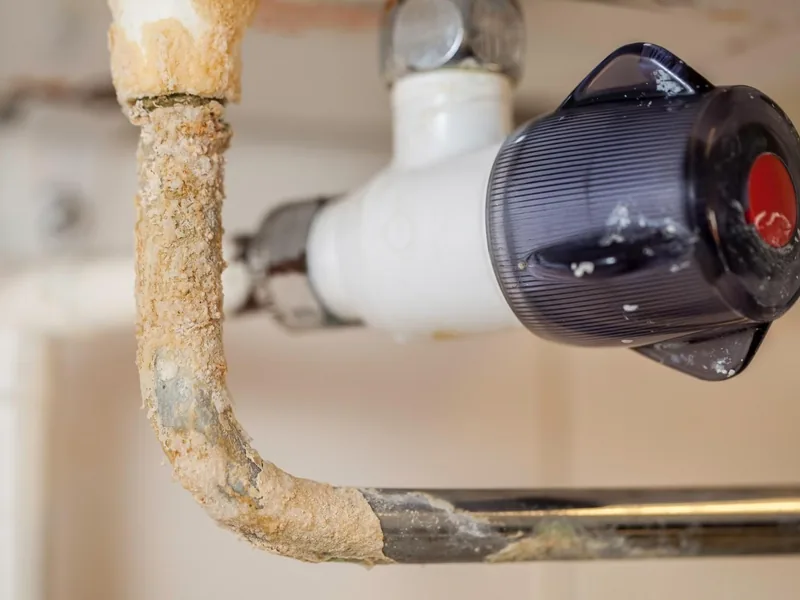
Northern Texas water is hard — packed with dissolved calcium and magnesium — and your water heater feels it more than any other appliance in the house. Hard water does not just leave spots on your dishes; it shortens water heater life, raises energy bills, and eventually causes leaks. If you live in DeSoto, understanding hard water's effect on your heater is the first step to protecting it.
How Hard Water Damages a Water Heater
Every time the tank heats water, dissolved minerals precipitate out and settle as sediment on the tank bottom. In hard-water areas, this happens fast — a DeSoto tank can accumulate a thick sediment layer in just a couple of years without flushing. That sediment is an insulator: it sits between the burner or heating elements and the water, forcing the heater to run longer and hotter to do the same job. The overheated tank bottom weakens, the glass lining cracks under thermal stress, and corrosion finds its way in. Sediment also creates the popping and rumbling noises many homeowners hear — that is literally water boiling through trapped mineral layers.
Heating elements on electric heaters fare even worse: mineral scale coats the elements, causing hot spots that burn them out years early. Anode rods — the tank's corrosion defense — get consumed faster in mineral-heavy water. And every valve and fitting on the unit, from the drain valve to the TPR valve, gets grit in its seals.
Signs Hard Water Is Hurting Your Heater
- Popping, cracking, or rumbling noises during heating — the signature sound of sediment buildup.
- Rising energy bills with no change in usage — the heater is working harder through the sediment blanket.
- Hot water runs out faster than it used to — sediment displaces water, shrinking effective tank capacity.
- Frequent element failures on electric models.
- White scale on fixtures and a sulfur smell from the hot water side — corroborating evidence of mineral-heavy water.
The Real Costs
A sediment-burdened heater can use noticeably more energy — industry estimates put the efficiency penalty at up to 25 percent for heavily scaled tanks. More importantly, hard water can cut a tank's service life from twelve years to eight or less. That means buying a replacement heater years early, a far bigger cost than any maintenance. In our DeSoto water heater repair work, tanks under ten years old with heavy scale damage are a recurring and frustrating sight, because most of it was preventable.
What You Can Do
Flush the tank annually. This is the single most effective defense. Draining a few gallons — or a full flush — clears sediment before it hardens into an immovable layer. In very hard water, twice a year is better, and a professional flush reaches sediment a garden-hose DIY flush often leaves behind.
Consider a water softener or conditioner. A softener removes the minerals before they ever reach the heater, dramatically extending tank and element life. Note the trade-off: softened water is slightly more aggressive toward anode rods, so inspect the rod more often if you soften.
Lower the temperature. Keeping the thermostat at 120 degrees instead of 140 slows mineral precipitation and saves energy — a rare win-win.
Schedule professional maintenance. A yearly water heater tune-up includes flushing, anode rod inspection, valve checks, and pressure testing — the full preventive package that hard water demands.
When Damage Is Already Done
If the tank is rumbling loudly, leaking from the bottom, or showing rust, flushing will not reverse the damage — and aggressive flushing of a badly scaled old tank can actually disturb sediment that was plugging small leaks. At that point, replacement (possibly paired with a softener) is the honest recommendation.
Testing Your Water Hardness
You do not have to guess about your water. Inexpensive test strips from any hardware store measure hardness in grains per gallon (gpg): under 3 is soft, 3 to 7 is moderately hard, and anything above 7 is hard. Much of the Dallas-Fort Worth area, including DeSoto, tests in the hard range, and levels can vary by neighborhood and season. Knowing your number helps you calibrate everything else — how often to flush, whether a softener is worth the investment, and how aggressively to watch the anode rod. If you install a softener, retest afterward to confirm it is working, and remember the trade-off: softened water protects against scale but consumes anode rods faster, so shorten your rod inspection interval. Pairing a softener with disciplined annual water heater maintenance gives you the best of both worlds: minimal scale and a protected tank.
Worried hard water is killing your water heater? Call Water Heater Leak Repair Specialists at (833) 713-2101. We will assess the sediment damage, flush or service your unit, and help you protect the next one.