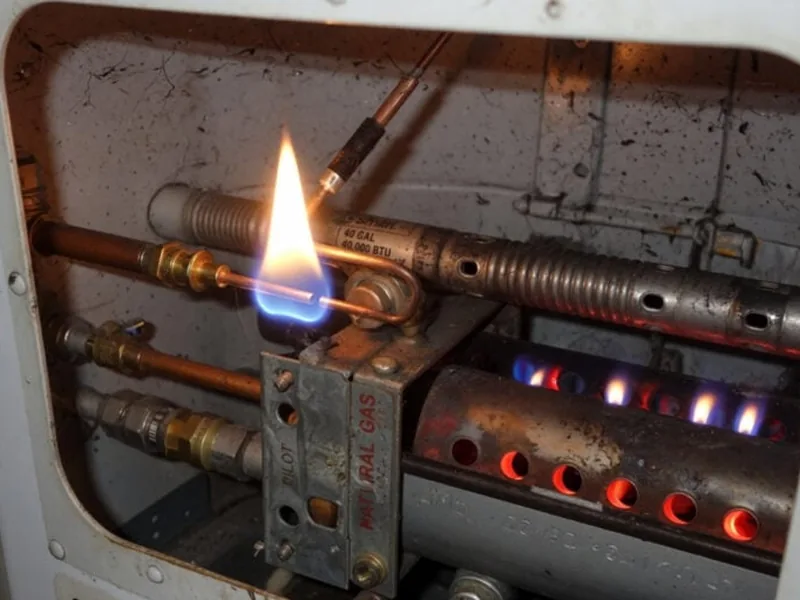
There is a special frustration in a pilot light that keeps going out. You relight it, hot water returns, and a day later you are back with the matches. On a gas water heater, pilot problems are among the most common service calls we get in DeSoto — and they range from a five-minute fix to a sign of a failing gas valve. This guide explains how the pilot system works, why pilots go out, and when to stop relighting and call a professional.
How the Pilot System Works
The pilot is a small, continuous flame that sits ready to ignite the main burner when the thermostat calls for heat. A thermocouple — a small sensor in the pilot flame — generates a tiny electric current as long as the flame is present. That current holds the gas valve open. If the flame goes out, the current stops and the valve snaps shut, cutting gas flow. It is an elegant safety system: no flame, no gas. When your pilot 'will not stay lit,' something in that chain is breaking down.
Common Causes of Pilot Problems
- Dirty or clogged pilot orifice. Dust, lint, and spider webs — common in Texas garages — partially block the tiny pilot opening, producing a weak flame that the thermocouple cannot reliably sense.
- Failing thermocouple. Thermocouples wear out; a weak one generates too little current to hold the valve open, so the pilot dies the moment you release the knob. This is the single most common cause.
- Drafts blowing out the flame. A missing or damaged burner access cover, a nearby vent, or wind through a garage door can snuff a marginal pilot.
- Faulty gas control valve. If a new thermocouple does not fix it, the valve's pilot circuit may be failing — see our guide on gas control valve problems.
- Gas supply issues. A partially closed gas valve, low line pressure, or air in the line after utility work can starve the pilot.
- Water damage or corrosion. A leaking tank dripping onto the burner assembly corrodes the pilot and thermocouple — a sign the tank itself needs attention.
How to Safely Relight a Pilot (Once)
If the pilot is out and you smell no gas: turn the gas control knob to OFF, wait five full minutes for any gas to clear, then turn the knob to PILOT, press and hold it, and ignite with the piezo button or a long lighter while continuing to hold for 30–60 seconds. Release slowly — if the flame stays, turn the knob to ON and set the temperature. If the pilot will not light after two attempts, or goes out again within a day, stop and call a professional. Repeated failed attempts can let gas accumulate, and a chronically dying pilot is telling you something is wrong.
When the Problem Is Bigger Than the Pilot
A pilot that repeatedly fails after thermocouple replacement points to the gas valve. Yellow, lazy pilot flames (instead of crisp blue) suggest contamination or pressure problems. And any pilot trouble combined with water around the base of the heater means the tank may be leaking onto the burner — at that point the pilot is a symptom, not the disease, and the heater needs a full leak inspection in DeSoto before anything else.
When to Call a Professional
Call if you smell gas at any point (leave the house and call the gas utility first), if the pilot will not stay lit after relighting, if the flame looks abnormal, or if the heater is old enough that valve replacement costs approach replacement value. Pilot work involves gas and combustion — beyond one careful relight, it belongs to a technician with the right diagnostic tools and gas training.
Modern Heaters: Electronic Ignition vs. Standing Pilot
Not every gas heater has a pilot light anymore. Many newer models use electronic ignition — a hot-surface igniter or spark ignition that lights the burner only when heat is called for, with no standing flame. If your heater has no pilot to relight, 'pilot problems' translate to ignition failures: a worn igniter, a faulty flame sensor, or a control board issue. The troubleshooting logic is similar — the system must prove flame before allowing gas — but the parts differ, and electronic components require a technician's diagnostic tools. When shopping for a replacement heater, electronic ignition is worth considering: it saves the small but constant gas use of a standing pilot and eliminates an entire category of nuisance failures that keep DeSoto homeowners reaching for the matches.
Pilot keeps going out in DeSoto? Call Water Heater Leak Repair Specialists at (833) 713-2101. We will find the real cause — thermocouple, valve, or tank — and fix it right the first time.