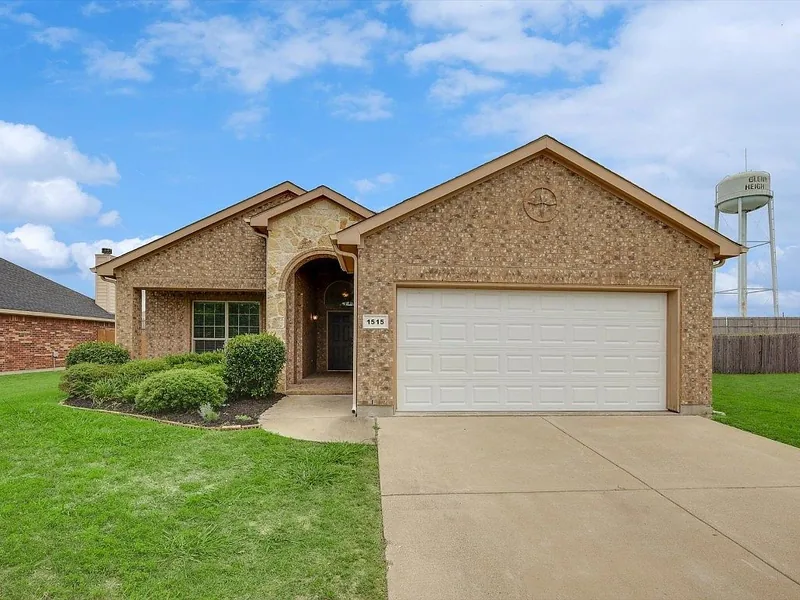
In Short
In short: if your water heater is leaking in Glenn Heights, TX 75154, call Water Heater Leak Repair Specialists at (833) 713-2101. We provide same-day leak diagnosis and repair across Glenn Heights — first-generation replacement tanks, attic installations, and 1980s–2000s subdivision homes.
Water Heater Leak Repair for Glenn Heights, TX 75154
Glenn Heights is the young suburb of the Best Southwest — the southern Dallas County city, spilling into Ellis County, where 82 percent of the housing was built after 1980. The subdivisions tell the story in their names: Hampton Park, Maplewood, Morgan Heights, Cinnamon Springs, Stewart Farms — planned neighborhoods of two-story brick homes along the Ovilla Road and I-35E corridors, about 25 minutes from downtown Dallas, feeding into DeSoto ISD. The median Glenn Heights home is decades newer than the housing in the suburbs to the north. And that youth is exactly why water heater calls are surging here now: the city is living through its first great replacement wave. If your heater is leaking anywhere in 75154, call (833) 713-2101.
Here is the math of a young suburb. The homes built in the 1980s, 1990s, and early 2000s overwhelmingly shipped with builder-grade original tanks — and a conventional tank lasts roughly 8 to 12 years in North Texas water. That means Glenn Heights’ original water heaters have been failing in a rolling wave for years, and the wave is cresting now: 1990s tanks at 25-plus years, 2000s tanks at 15 to 20. Many homeowners here have never replaced a water heater before, because the house never needed one until now. We guide first-time replacers through the whole decision — sizing, gas versus electric, pan and expansion details, what the old install got wrong — with the patience the moment deserves.
The First Replacement Wave: What 75154 Looks Like Now
In an older suburb, a leaking water heater is routine — the third or fourth unit the house has seen. In Glenn Heights, it is often a milestone: the first replacement the home has ever needed. That changes the service call. Homeowners understandably have questions they have never needed to ask: How do I know it cannot be repaired? What size do I actually need? Why did the original fail — and will the new one fail the same way? We answer all of it, starting with the leak source shown directly — a tank leaking through its wall is done, a leak at a valve or fitting is a repair — and continuing through the installation details that decide how long the replacement lasts.
The housing itself is classic late-20th-century suburbia: two-story brick homes on slab foundations, water heaters in garages, upstairs utility closets, and — very commonly — attics. Attic installations are the high-stakes variant here. An attic tank in a Glenn Heights two-story sits in punishing summer heat that accelerates corrosion, and when it leaks, the water attacks from above: ceiling drywall, insulation, and second-floor finishes. Drain pans crack with age; pan drain lines clog with blown insulation. We treat every 75154 attic leak as urgent, because the damage curve on a second-floor leak is brutally steep.
The 1980s slice of Glenn Heights carries one more era-specific concern: supply piping material. Some 1980s homes in this area were plumbed with polybutylene, the gray plastic piping used widely from the late 1970s through the mid-1990s, which becomes brittle with age and fails suddenly at fittings. A water heater service call is the perfect moment to identify it — we note the piping material on every 1980s-home visit and check the transitions near the heater with extra care. If your home is from the 80s and you have never had the piping checked, mention it when you call.
Glenn Heights Water and the Builder-Tank Lifespan
Glenn Heights homes run on purchased treated surface water through the regional system — moderately hard, like the rest of North Texas. On a builder-grade original tank, that hardness has been working since the day the home was finished. Here is what “builder-grade” actually means in practice: a minimum-spec tank with a shorter warranty, a thinner anode rod, and basic components — perfectly adequate with maintenance, and unforgiving without it. Almost none of these original tanks were ever flushed. Almost none had their anode rods checked. So the sediment built undisturbed for 15, 20, 25 years: scale insulating the burner, the rumbling and popping growing louder each year, the anode long gone and the tank rusting from the inside.
That is why the failures arriving now look the way they do: tanks seeping from the base where sediment overheated the steel, rust-colored hot water that no longer clears, relief valves dripping from pressure in closed systems that never got working expansion tanks. The good news is that the replacement can be dramatically better than the original. We size to the actual household — not the builder’s minimum — and install the details the original skipped: a proper drain pan with a working drain line, an expansion tank matched to system pressure, full-port brass drain valve instead of factory plastic, and quality supply connections. A Glenn Heights replacement done right should outlive the original by years.
First-Time Replacement, Done Right in 75154
Call (833) 713-2101 and tell us what you are seeing — and if you have never dealt with a water heater failure before, say so; we will slow down and explain everything. If water is spreading, we start with damage control: the cold-water shutoff above the heater, the breaker or gas valve, and for attic units, protecting the rooms below. Then a technician arrives the same day with a truck stocked for the replacement wave: 40- and 50-gallon tanks, pans, expansion tanks, brass valves, unions, and fittings.
- Honest repair-or-replace verdict with the leak source shown to you directly.
- Attic leak emergency response with ceiling protection and water-path tracing.
- Proper sizing based on bathrooms, occupants, and real hot-water use.
- Complete installation details: pan, drain line, expansion tank, quality valves and connections.
- 1980s piping checks for polybutylene and aging transitions near the heater.
- Sediment flushing for mid-life tanks worth saving.
- Anode rod service to extend the life of a tank with years left.
- Maintenance plan so the new unit never repeats the original’s neglected life.
Glenn Heights is a city of firsts right now — first replacement water heaters for thousands of homes. Make yours count. A correctly sized tank, installed with the pan, expansion, drainage, and valve details the builder skipped, maintained with a yearly flush, will serve the household far longer than the original ever did. That is the upgrade hidden inside the emergency: not just hot water restored, but a system finally set up right.
Glenn Heights, TX 75154 — Area Fact Box
- Coverage: Glenn Heights, southern Dallas County into Ellis County, along Ovilla Road and I-35E
- Housing era: 82% built after 1980 (46% in the 1980s, 36% in the 1990s); first replacement wave underway
- Common installs: Garage, upstairs utility closet, attic in two-story plans
- Plumbing: Modern systems; some 1980s polybutylene; builder-grade original tanks predominant
- Water: Purchased treated surface water via the regional system, moderately hard
- Watch for: End-of-life original tanks, attic pan failures, missing expansion tanks, 1980s piping material
Water Heater Leak FAQs — Glenn Heights, TX 75154
My Glenn Heights home was built in the 1990s and the water heater is original. Is it about to fail?
Very likely, yes — and you should plan for it rather than wait. A 1990s tank is 25-plus years old, roughly double the 8-to-12-year expected life in North Texas water. In Glenn Heights we are seeing the city’s first great replacement wave right now: original builder tanks from the 80s, 90s, and 2000s failing within a few years of each other. If yours is still running, consider yourself lucky — and call (833) 713-2101 for an inspection before it chooses the timing for you.
How do I find the age of my water heater?
Check the serial number on the manufacturer’s label — most brands encode the manufacture date in the first few characters (often the year and week or month). The label also lists the tank size and model. If you cannot decode it, read the brand and full serial number to us at (833) 713-2101 and we will date it for you. In Glenn Heights, where so many tanks are original to 1990s and 2000s builds, this one check answers the repair-or-replace question most of the time.
My 1980s Glenn Heights home might have polybutylene piping. Does that affect the water heater?
It affects the connections, which is close enough to matter. Some 1980s homes in this area were plumbed with polybutylene supply piping, which becomes brittle with age and is prone to sudden failure at fittings — including the fittings near the water heater. When we service a 1980s Glenn Heights home, we note the piping material and check those connections with extra care. A water heater replacement is also a natural moment to address failing PB transitions before they burst.
My water heater is in the attic. What maintenance does it need?
More than a garage unit, because the consequences of neglect are worse. Once a year, check the drain pan for cracks and make sure its drain line to the exterior flows freely — pour a little water in the pan and watch it exit outside. Look at the ceiling below for any staining. And know that attic heat accelerates corrosion, so attic tanks in Glenn Heights’ two-story homes often fail sooner than their garage counterparts. At the first ceiling spot or musty smell upstairs, call (833) 713-2101 immediately.
Will my HOA have rules about water heater replacement?
HOAs in Glenn Heights’ planned subdivisions generally govern exteriors — paint, fencing, landscaping — not the water heater inside your garage or attic. Exterior work like running a new pan drain line or relief discharge through a wall is rarely an issue, but if your community has strict exterior modification rules and we need to route anything outside, mention it when you call and we will plan the work accordingly. The replacement itself is interior work.
Should I upgrade to a larger tank when mine is replaced?
Only if your household has outgrown the current size. Many Glenn Heights homes have 40-gallon tanks serving families that have grown since the home was built — teenagers take longer showers than toddlers. But bigger is not automatically better: an oversized tank costs more to run and may not fit the existing space. When we quote a replacement, we size based on your bathrooms, occupants, and actual hot-water use — not on whatever the builder installed decades ago.
Glenn Heights’ Replacement Wave Is Here — Be Ready
If your Glenn Heights water heater is over 12 years old, find its manufacture date on the serial number today — not after it fails. And if it is already leaking, dripping, rumbling, or running rusty, call Water Heater Leak Repair Specialists at (833) 713-2101 now. We serve the full 75154 ZIP with same-day diagnosis, patient guidance for first-time replacers, and installations done right the first time.